Teaching tips · Vietlingo
Teaching Vietnamese tones to beginners
1Teach tones with word pairs, gestures, and the right regional voice.

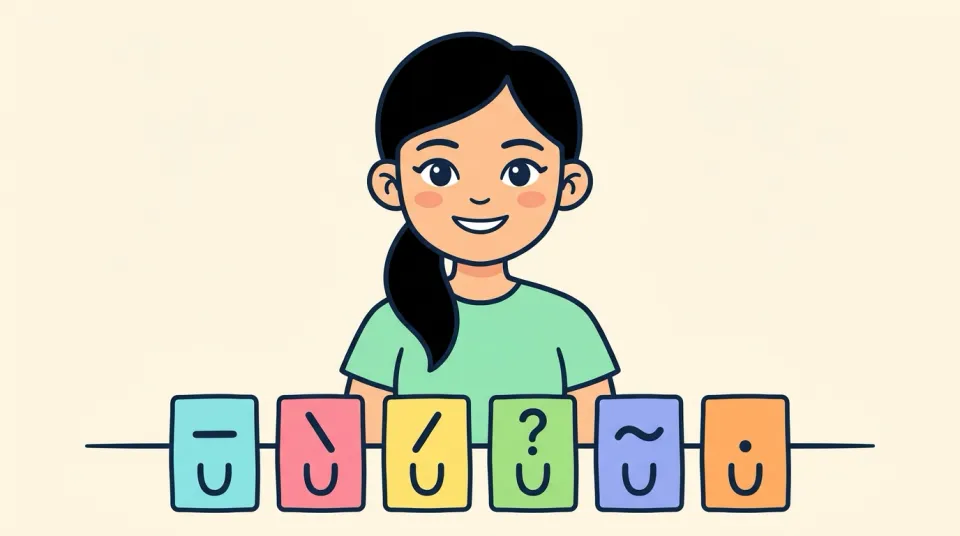
Hello, teaching Vietnamese tones to beginners is always a challenge, but also very interesting. Written Vietnamese has 6 tones: ngang (ma), huyền (mà), sắc (má), hỏi (mả), ngã (mã) and nặng (mạ). Here are effective ways to help learners overcome this difficult part.
Understanding Regional Tones
Tone pronunciation differs depending on the region:
- Northern speech (Hanoi): Pronounces all 6 tones clearly and distinctly.
- Southern speech: The hỏi and ngã tones are pronounced the same, both sounding like the hỏi tone.
- Central speech (Hue): Pronunciation is very different. Sometimes the hỏi, ngã, and nặng tones can sound quite similar.
You should teach in your natural regional dialect. However, you must always write the correct tone mark on the word. At the same time, remember to tell the student which regional dialect they are listening to.
Practical Teaching Techniques
Instead of spending one long lesson just teaching tones, you should break it down and practice a little bit in every lesson. Apply these methods:
- Minimal pairs: Practice listening and repeating sequences like ma/mà/má/mả/mã/mạ or ba/bà/bá/bả/bã/bạ.
- Hand gestures: Use your hands to show the pitch movement so the student can easily visualize the direction of the sound.
- Exaggerate sounds: At first, you can intentionally pronounce slowly and exaggerate. Then, say it again at a natural speed.
- Lesson audio: Every lesson, including trial lessons, is audio-recorded to create the lesson summary. Audio is deleted after 30 days. If you do not want a lesson recorded, contact support before the lesson.
Practice With Real Vocabulary
Do not just practice tones in isolation. Put tones into practical words or phrases that the student needs to use every day, for example "cảm ơn" or "bao nhiêu".
Learners often confuse the sắc tone with the hỏi tone, and confuse the huyền tone with the nặng tone. Pay attention and listen for these mistakes. When the student is speaking freely, do not correct every single small error. Just pick 1 or 2 key mistakes to correct and always praise their progress.

Quick tip: Encouragement from you is more important than the student having perfect pronunciation right from the start.
Vietlingo