Key takeaway
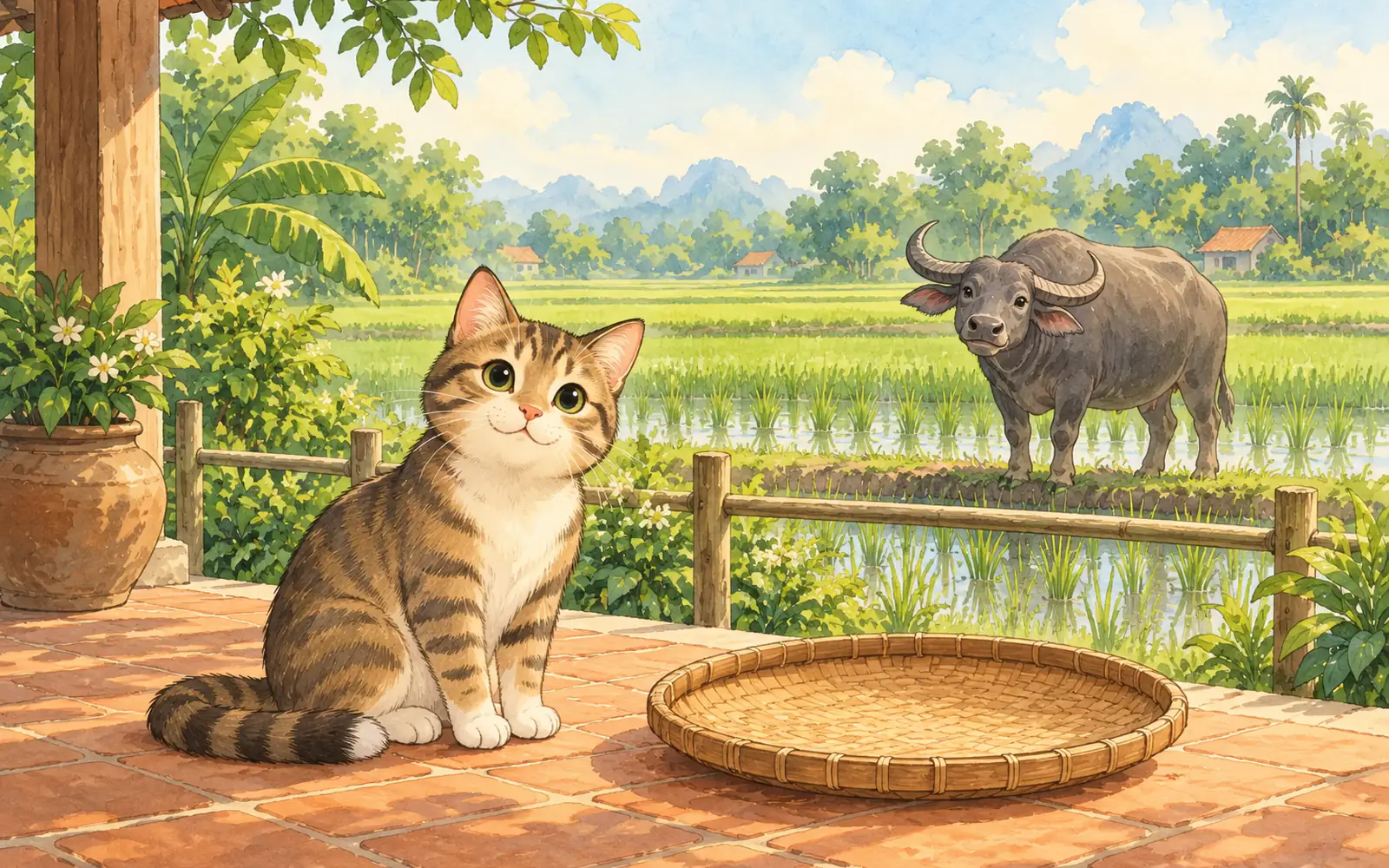
The Vietnamese and Chinese zodiacs share ten animals and differ on two: Vietnam has the cat (mèo, for Mão) instead of the rabbit, and the water buffalo (trâu, for Sửu) instead of the ox. No explanation for the cat is official; phonetic and agricultural accounts are competing theories; the Great Race account is a folktale.
Vietnam and China share ten of the twelve zodiac animals, while two signs differ: the Vietnamese zodiac has the cat (mèo) where China has the rabbit, and the water buffalo (trâu) where China has the ox. The other ten signs—rat, tiger, dragon, snake, horse, goat, monkey, rooster, dog, and pig—match.
Some Vietnamese commentary counts the cat as the sole difference; this table compares the animals named in English. Below are all twelve signs, the theories for the cat, the twelve Earthly Branches, Northern and Southern ways to say your sign, and the 2027 Year of the Goat. This post tells no fortunes.
| Order | Earthly Branch | Vietnamese Word | Vietnamese Sign | Chinese Sign |
|---|---|---|---|---|
| 1st | Tý (Tí) | Chuột | Rat | Rat |
| 2nd | Sửu | Trâu | Water buffalo | Ox (cow) |
| 3rd | Dần | Hổ | Tiger | Tiger |
| 4th | Mão (N) / Mẹo (S) | Mèo | Cat | Rabbit |
| 5th | Thìn | Rồng | Dragon | Dragon |
| 6th | Tỵ | Rắn | Snake | Snake |
| 7th | Ngọ | Ngựa | Horse | Horse |
| 8th | Mùi | Dê | Goat | Goat |
| 9th | Thân | Khỉ | Monkey | Monkey |
| 10th | Dậu | Gà | Rooster (chicken) | Rooster |
| 11th | Tuất | Chó | Dog | Dog |
| 12th | Hợi | Lợn (N) / Heo (S) | Pig | Pig |
Why does the Vietnamese zodiac have a cat instead of a rabbit?
As Ngôi Sao - VnExpress reports, there is no official explanation for how the rabbit came to be represented by the cat in Vietnam; the proposed explanations remain theories.
Professor Lê Văn Lan's reverse hypothesis
Historian Professor Lê Văn Lan argues the reverse in Báo Người Lao Động: ancient Chinese and Vietnamese originally understood Mão as the cat (Southern Vietnamese still calls the branch Mẹo, near mèo), and Tang China (7th–9th centuries) later mistook Mão for the rabbit.
Wet-rice farming, familiarity, and the Great Race folktale
In an AFP report in VnExpress International, culture expert Nguyễn Hiếu Tín explains the theory that wet-rice farmers prized cats for hunting rats in fields, and adds that Vietnamese speakers saw rats and rabbits as closely related animals and avoided two similar signs.
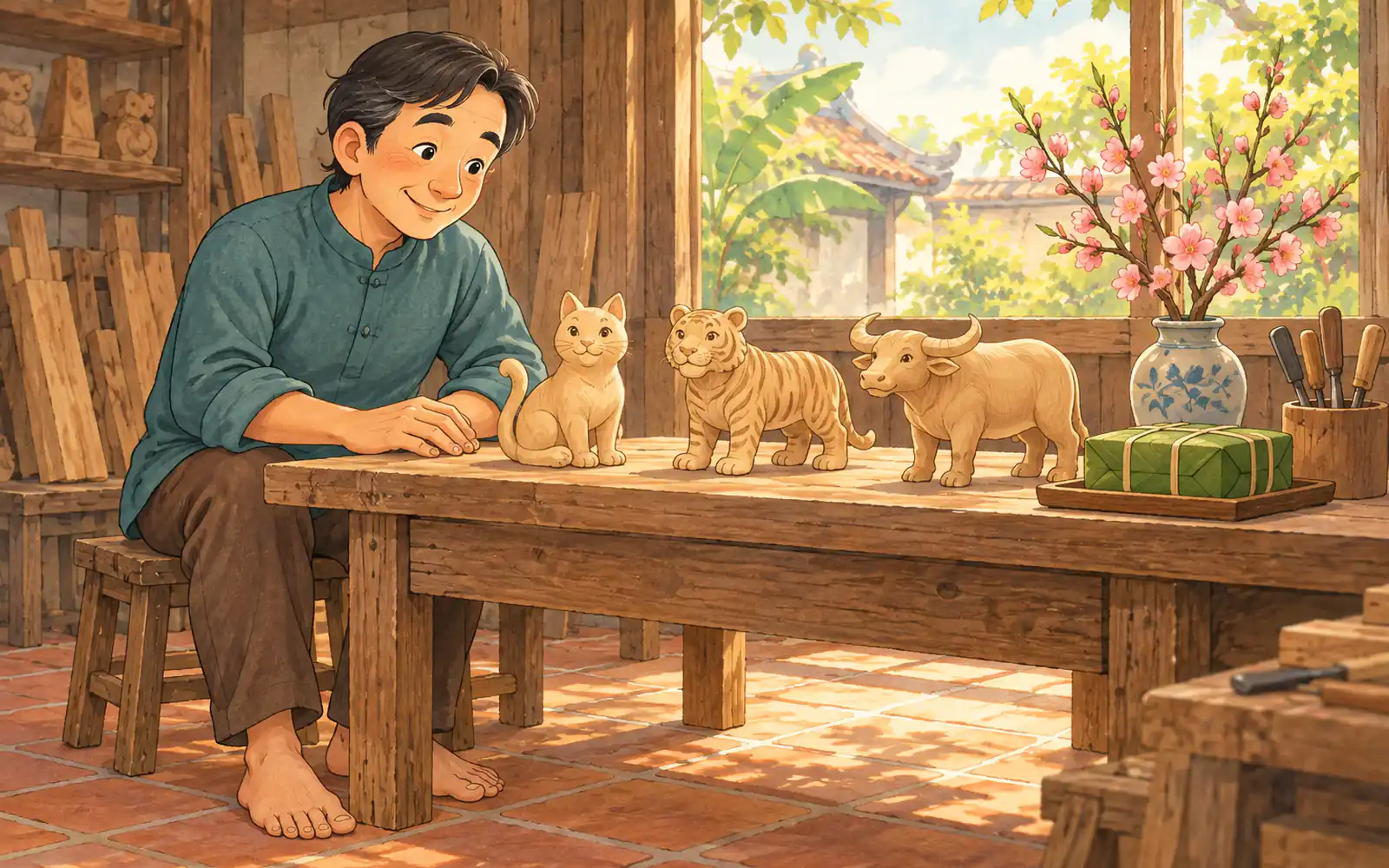
Another common theory holds that cats were chosen because they were familiar in Vietnamese life—an explanation Kinh tế Sài Gòn disputes because rabbits are no more familiar than cats in China and both zodiacs include the mythical dragon. Finally, in a Great Race folktale recorded by the Vietnam National Museum of History, after the rat pushed the cat off the buffalo into the river, the tiger rescued the cat so they placed third and fourth.
| Theory | Source | Claim | Status |
|---|---|---|---|
| Oral shift (Mão/mèo) | VnExpress | Mão sounded like mèo. | Theory |
| Mão and miêu | Ngôi Sao - VnExpress | Mandarin mǎo sounded near māo (miêu). | Theory |
| Misreading mão thố | Lam Điền (Tuổi Trẻ) | Mão in mão thố was read as mèo. | Theory |
| Cantonese máo | Kinh tế Sài Gòn | Cantonese reads Mão and cat as máo. | Theory |
| Reverse shift | Prof. Lê Văn Lan | Mão (Mẹo) meant cat before Tang China. | Theory |
| Wet-rice rat hunting | Nguyễn Hiếu Tín | Cats hunted rats; avoided two similar signs. | Theory |
| Everyday familiarity | Kinh tế Sài Gòn | Cats were familiar in Vietnam (disputed: China also had cats and the dragon). | Disputed |
| Great Race rescue | Museum of History | The tiger rescued the cat from the river. | Folktale |
How do the twelve Earthly Branches work in Vietnamese?
As Tuổi Trẻ Online documents, the twelve Earthly Branches (Thập nhị Địa chi) are Tý, Sửu, Dần, Mão, Thìn, Tỵ, Ngọ, Mùi, Thân, Dậu, Tuất, and Hợi, paired in order with twelve animal nouns: chuột, trâu, hổ, mèo, rồng, rắn, ngựa, dê, khỉ, gà, chó, and lợn.
- Regional words: Northern and Southern speakers generally understand each other, though Northern speakers say Mão (4th branch) and con lợn (12th animal, pig) while Southern speakers say Mẹo and con heo, a pair in our 50 Northern and Southern word comparisons.
- Tones and initials: Standard spelling has six written tone categories (five marks plus the unmarked tone). As in our Northern vs. Southern Vietnamese guide, Hà Nội distinguishes all six spoken tones (giving Mão a rising pitch with a voice break), while Sài Gòn merges hỏi and ngã. In Hà Nội, d (Dần, dê, Dậu) and r (rồng, rắn) sound like z, while in Sài Gòn d sounds like y and r varies; trâu merges with ch in Hà Nội while many Southern speakers keep tr distinct.
How do you ask and say your zodiac sign in Northern and Southern Vietnamese?
The noun tuổi denotes one's lunar birth-year sign and age. A zodiac sign can start a conversation, but it does not tell you which age-based form of address to use, as explained in Vietnamese kinship terms for addressing people by age. For the question structure, see how to ask questions in Vietnamese with gì, ai, and đâu. These examples show how to ask and answer:
- Ask with tuổi gì?: For example, Em tuổi gì?
- Answer with the animal word: For example, Em tuổi con mèo.
- Answer with the branch or cầm tinh: Pair tuổi with a branch (Tuổi Dần, tuổi Sửu), or add cầm tinh con [animal], as in Anh ấy tuổi Sửu, cầm tinh con trâu ("He is Sửu, born under the buffalo").
| Function | Northern (Hà Nội) | Southern (Sài Gòn) | Meaning |
|---|---|---|---|
| Ask an older man | Anh tuổi gì thế ạ? | Anh tuổi gì vậy? | What is your sign? |
| Ask a younger person | Em tuổi gì? | Em tuổi gì? | What is your sign? |
| Cat sign (animal) | Em tuổi con mèo. | Em tuổi con mèo. | I am a Cat. |
| Cat sign (branch) | Mình tuổi Mão. | Mình tuổi Mẹo. | I am Mão / Mẹo. |
| Pig sign (animal) | Tôi tuổi con lợn. | Tui tuổi con heo. | I am a Pig. |
| With cầm tinh | Anh ấy tuổi Sửu, cầm tinh con trâu. | Ảnh tuổi Sửu, cầm tinh con trâu. | He is Sửu (buffalo). |
Compare a brief exchange in Northern (N) and Southern (S) speech (dạ is the everyday polite opener in the South and is heard in the North too, where vâng and a closing ạ are common):
- N (Hà Nội): Chị tuổi gì thế ạ? — Chị tuổi Mão, tuổi con mèo. Còn em tuổi gì? — Dạ, em tuổi Hợi, tuổi con lợn ạ.
- S (Sài Gòn): Chị tuổi gì vậy? — Chị tuổi Mẹo, tuổi con mèo. Còn em tuổi gì? — Dạ, em tuổi Hợi, tuổi con heo.
What Vietnamese zodiac year is 2027?
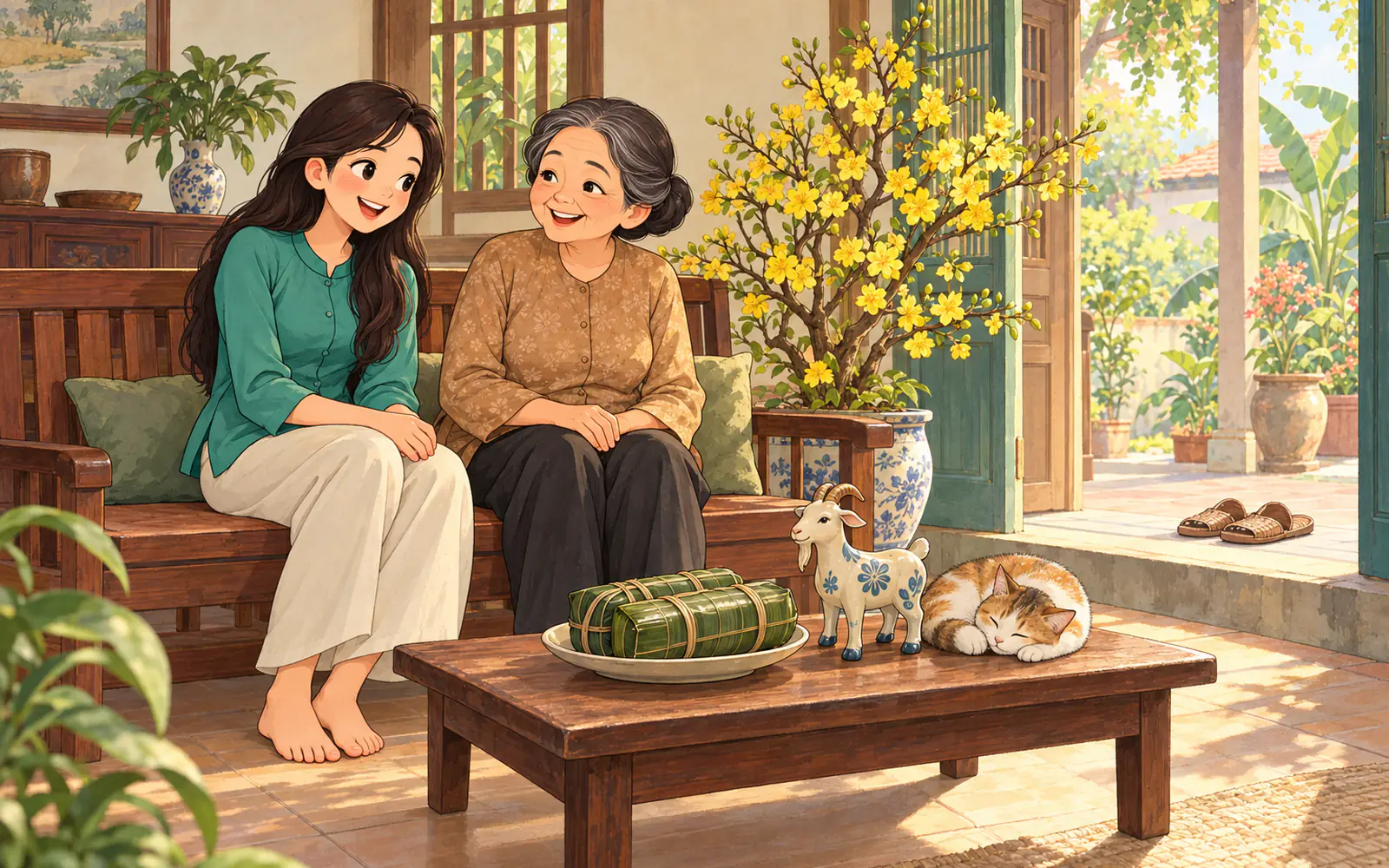
In the Vietnamese lunar calendar, 2027 is the Year of the Goat (Đinh Mùi), following the 2026 Year of the Horse (Bính Ngọ). As Tuổi Trẻ Online reports, the first day of the Đinh Mùi Lunar New Year (Tết) falls on 6 February 2027 (with 10 February 2027 being the fifth day of the first lunar month).
Signs follow the lunar calendar, so a child born in January 2027 is still a Horse. Read more in Tết in Northern and Southern Vietnam.
Key takeaways
- Two signs differ from China: Vietnam has the cat (mèo) for Mão and the water buffalo (trâu) for Sửu; the other ten match.
- No explanation for the cat is official: Phonetic shifts (Mão, miêu, máo, mèo), Professor Lê Văn Lan's reverse hypothesis, wet-rice rat hunting, and everyday familiarity are proposed explanations, and the Great Race rescue is a folktale.
- Two naming sets: Branches attach to tuổi (tuổi Dần, tuổi Sửu); animal nouns use con (tuổi con mèo, cầm tinh con trâu).
- Regional forms: Northern uses Mão and con lợn; Southern uses Mẹo and con heo.
- 2027 is the Year of the Goat (Đinh Mùi): Following 2026 (Bính Ngọ), it begins on 6 February 2027.
Turn cultural curiosity into real Vietnamese conversations
Use these sign questions to practice a short conversation in Vietnamese. Start with Everyday Southern Vietnamese, Level 00 (built on SVFF lessons, following Ben in Sài Gòn across the tones, Southern finals, greetings, address words, and numbers 0 to 10), explore Everyday Northern Vietnamese, Level 01 (in Beta, with some parts such as audio still being added, following Lucia in Hà Nội through workplace introductions with anh, chị, em, and bác), or start Central Vietnamese with Everyday Huế Vietnamese, Level 00.
For video lessons, try Slow Vietnamese 01 - Southern or Slow Vietnamese 01 - Northern, where conversations start at a reduced speed and move gradually to normal speed across greetings, personal information, and everyday interactions. To practice aloud, see live one-to-one lessons with tutors or book a trial lesson.
Frequently asked questions
Why does the Vietnamese zodiac have a cat instead of a rabbit?
There is no official answer, and several theories compete: linguistic theories link Mão, Sino-Vietnamese miêu, or Cantonese máo to mèo (cat); Professor Lê Văn Lan argues Mão meant cat before Tang China switched to the rabbit; cultural experts cite wet-rice farmers prizing rat-hunting cats and avoiding two similar signs; and a Great Race folktale says the tiger rescued the cat from the river.
How many signs differ between the Vietnamese and Chinese zodiacs?
Two signs differ: Vietnam has the cat (mèo) for Mão and the water buffalo (trâu) for Sửu, while ten match; some Vietnamese commentary counts only the cat as different.
What are the 12 Vietnamese zodiac signs in order?
From first to twelfth: Tý (chuột, rat), Sửu (trâu, water buffalo), Dần (hổ, tiger), Mão or Southern Mẹo (mèo, cat), Thìn (rồng, dragon), Tỵ (rắn, snake), Ngọ (ngựa, horse), Mùi (dê, goat), Thân (khỉ, monkey), Dậu (gà, rooster/chicken), Tuất (chó, dog), and Hợi (Northern lợn or Southern heo, pig).
How do you ask and say your zodiac sign in Vietnamese?
You can ask with tuổi gì? (for example, Em tuổi gì?) and reply with the animal word (Em tuổi con mèo.) or the Earthly Branch (Mình tuổi Mão in the North or Mình tuổi Mẹo in the South).
What Vietnamese zodiac year is 2027?
In the Vietnamese lunar calendar, 2027 is the Year of the Goat (Đinh Mùi, tuổi Mùi or tuổi con dê), beginning on Lunar New Year (Tết) on 6 February 2027 after the 2026 Year of the Horse (Bính Ngọ).



Comments (0)
A new word, a question, or a different perspective? Share it with fellow learners.
Be the first to comment.