Key takeaway
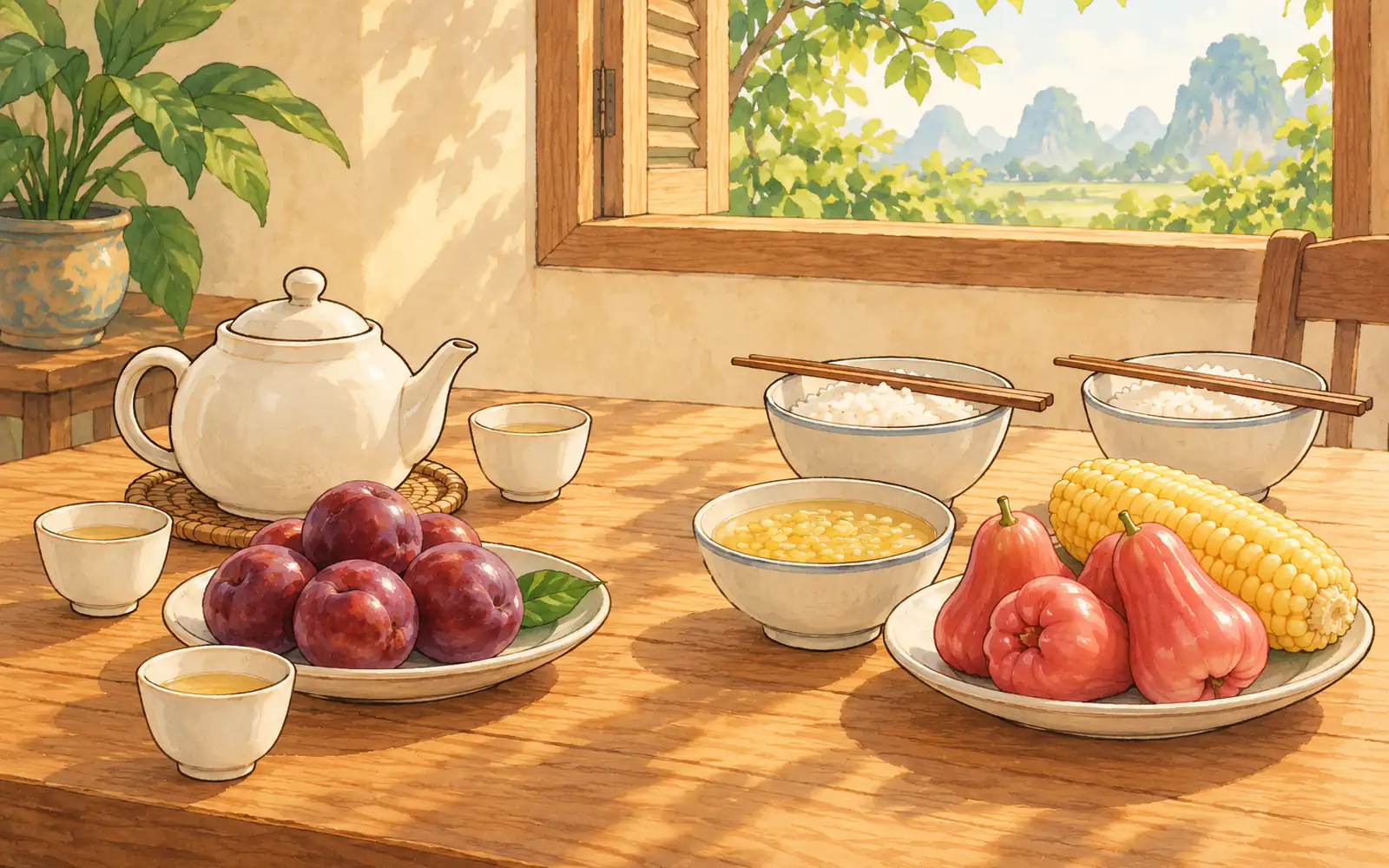
Several everyday Vietnamese words share the same spelling and tone marks across the country yet mean different things in the North and South—a pattern linguists call dialectal homonyms (từ địa phương đồng âm). Between Hà Nội and Sài Gòn, ốm shifts from "sick" to "thin," hòm from a storage box to a coffin, and chén from a teacup to a rice bowl.
In Vietnamese, several everyday words share the same spelling and tone marks yet have different meanings in the North and the South, a pattern linguists call dialectal homonyms (từ địa phương đồng âm). For example, ốm means "sick" in Hà Nội but "thin" in Sài Gòn, while hòm shifts from a storage box to a coffin.
At a glance: Nine Vietnamese words with different meanings in the North and South
Most regional differences use two words for one thing, like Northern bố and Southern ba for "father." These nine spellings have regionally favored meanings, although some senses are shared between Northern (Hà Nội) and Southern (Sài Gòn) Vietnamese.
| Word | Meaning in the North | Meaning in the South | Example sentence |
|---|---|---|---|
| ốm | Physically ill, sick (bị bệnh) | Thin, lacking fullness (gầy) | N: Hôm nay tôi bị ốm. (I am sick today.) |
| hòm | Lidded wooden or metal storage box (hòm quần áo) | Coffin for burying the dead (áo quan, quan tài) | N: Bà cất chăn vào hòm gỗ. (Grandma put blankets in the trunk.) |
| mận | Plum in the peach family (red or green fruit) | Spongy, bell-shaped wax apple (Northern roi) | S: Má mua mận ở chợ. (Mom bought wax apples at the market.) |
| chén | Small porcelain cup for tea or wine (bộ ấm chén) | Small rice bowl for meals (Northern bát) | S: Lấy thêm hai cái chén. (Grab two more rice bowls.) |
| bắp | Spindle-shaped plant part (bắp chuối) or muscle (bắp thịt) | Also maize or corn (Northern ngô); bắp chuối and bắp thịt retain their shared meanings | S: Em ăn trái bắp luộc. (I ate a boiled ear of corn.) |
| chè | Brewed tea leaves (pha chè) or sweet dessert soup | Sweet dessert soup with beans or rice (tea is trà) | N: Bố pha ấm chè nóng. (Dad brewed hot tea.) |
| thằn lằn | Ground-dwelling scaled skink in bushes | Indoor wall gecko (Northern thạch sùng) | S: Con thằn lằn bò trên tường. (The gecko crawls on the wall.) |
| bông | Grain ear (lúa trĩu bông) or flower classifier (một bông hoa) | Also a flower (bông cúc) or earring (đeo bông, hoa tai); grain-ear and flower-classifier senses are shared | S: Cô ấy mua bông cúc. (She bought chrysanthemums.) |
| cây | Living plant or tree with roots, trunk, and leaves | Living tree or plant; also wood or timber (Northern gỗ) | S: Mua cây đóng bàn ghế. (Buy timber to build furniture.) |
How the same word developed different regional meanings
Vietnamese has three major dialect regions—Northern (phương ngữ Bắc), Central (phương ngữ Trung), and Southern (phương ngữ Nam)—formed through historical southward migration and settlement, as described in Trịnh Cẩm Lan's review of Hoàng Thị Châu's scholarship. Most comparisons of Northern and Southern Vietnamese cover different words with the same meaning—see our 50 everyday Northern and Southern word comparisons—whereas these nine pairs work in reverse.
In Cơ sở ngôn ngữ học và tiếng Việt, Mai Ngọc Chừ, Vũ Đức Nghiệu, and Hoàng Trọng Phiến call regional words sharing the form of the general vocabulary (từ vựng chung) yet carrying distinct local meanings dialectal homonyms (từ địa phương đồng âm), citing ốm, hòm, thằn lằn, and kiềng (tripod stove vs. pot stand). They give two theories: accidental homonymy, or a shift in the object named by one word. Because shifting an existing object's name—such as Southern chén (for bát), mền (for chăn), or nón (for mũ)—confuses speakers outside the South, Nguyễn Tài Thái and Phạm Văn Hảo note that such words resist entering the national standard vocabulary. Lê Thị Ngọc Điệp's 2009 textbook study gives Northern chè and ốm and Southern chén and trà as regional examples.
| Pattern | Relation | Examples |
|---|---|---|
| Dialectal homonyms | Same word, different referent | ốm (sick / thin), hòm (box / coffin) |
| Regional synonyms | Different words, same object | ngô / bắp; thạch sùng / thằn lằn |
| Nationwide senses | Shared across both regions | dọn (tidy up, move house, lay out food) |
The meaning of ốm in Vietnamese, and why dọn is a myth
In the Institute of Linguistics' Từ điển tiếng Việt (Hoàng Phê, ed., 2003), standard ốm₁ means physically ill (ốm liệt giường), while ốm₂ is marked regional (ph.) and means thin (gầy, người ốm như que củi). Huỳnh Công Tín's Từ điển từ ngữ Nam Bộ (2007) confirms that Southern ốm means thin (ốm nhách, ốm nhom), whereas bịnh means sick.
Meanwhile, claims that dọn means "clean up" in the North and "lay out a meal" or "move house" in the South are a myth. Hoàng Phê's Từ điển tiếng Việt records tidying up (mâm bát bừa bãi chưa kịp dọn), moving house (dọn nhà), clearing obstacles, and laying out food (mâm cơm dọn sẵn, dọn tiệc) as nationwide senses without a ph. marker. In Từ điển từ ngữ Nam Bộ, dọn has Southern senses in specific compounds: dọn chà (clearing brushwood fish traps), dọn mình (preparing for death), and dọn tiệm (closing a shop).

Which mix-ups are awkward and which are harmless
In Hoàng Phê's Từ điển tiếng Việt, the secondary senses carry a regional (ph.) marker, and Huỳnh Công Tín's Từ điển từ ngữ Nam Bộ documents their Southern use:
- Awkward (hòm, ốm): Because hòm shifts from a Northern box (hòm quần áo, hòm phiếu) to a Southern coffin (áo quan), describe the storage box you need in Sài Gòn. Likewise, Nhìn bạn ốm quá shows sympathy for illness in Hà Nội but remarks on weight loss in Sài Gòn.
- Harmless tableware and drinks (chén, chè): A chén is a cup (mời cạn chén) in Hà Nội and a rice bowl in Sài Gòn. Northern chè means brewed tea or sweet soup; Southern speakers call tea trà (and Northern tea trà bắc), keeping chè for sweet soups.
- Harmless produce and nature (mận, bắp, thằn lằn, bông, cây): Market orders for mận or bắp (corn cob cùi vs. bắp chuối), spotting a thằn lằn, buying bông, or buying cây are clarified by the setting.
How to tell the meaning from context and what to do when a mix-up happens
Research by Bae Yang Soo and Đào Mục Đích (2015) notes that cross-dialect communication is manageable for native speakers yet challenging for foreign learners. As our guide to how Northern and Southern Vietnamese speakers understand each other explains, speakers generally understand each other by relying on companion words and setting:
| Word | Risk | Northern clue | Southern clue | Clarification |
|---|---|---|---|---|
| ốm | Awkward | Medicine, nghỉ ốm | Ốm nhom, vs. mập | Bị bệnh hay gầy? |
| hòm | Startling | Hòm quần áo | Burial context | Describe the storage box |
| chén | Harmless | Bộ ấm chén | Chén đũa, rice | Chén trà / chén cơm |
| chè | Harmless | Hái chè, pha chè | Ăn chè, beans | Uống trà / ăn chè |
| mận | Harmless | Plum (red or green fruit) | Bell-shaped, spongy | Mận Bắc / quả roi |
| bông / cây | Harmless | Một bông hoa; trồng cây | Bông cúc, đeo bông; mua cây | Check the verb |
- Check the collocation: Companion words disambiguate immediately—pha chè means brewing tea, ăn chè means eating sweet soup, đeo bông means wearing earrings, and mua cây đóng bàn ghế means buying timber.
- Echo back with a synonym: If someone says ốm, confirm with Bạn bị bệnh hả? (Are you sick?) or Dạo này gầy đi hả? (Have you lost weight?).
- Speak one dialect consistently: Once you decide which Vietnamese dialect to learn, keep your active words consistent while recognizing the other dialect's meanings.

A short North–South dialogue where a mix-up happens
Lan (from Hà Nội) visits Minh (in Sài Gòn) for lunch:
- S (Minh): Dạo này nhìn Lan ốm quá! (You look so thin lately, Lan!)
- N (Lan): Ơ, mình có bị ốm đâu! À, trong Sài Gòn "ốm" là "gầy" đúng không? (Wait, I am not sick! Oh, in Sài Gòn, ốm means "thin," right?)
- S (Minh): Đúng rồi, ở đây “ốm” là “gầy”. Vô bàn đi, mình lấy chén cho Lan. (Right, here ốm means thin. Come to the table; I'll get you a bowl.)
- N (Lan): Ngoài Hà Nội "chén" là chén uống chè, còn ăn cơm gọi là cái bát. (In Hà Nội, a chén is a teacup, whereas for rice we say bát.)
- S (Minh): Vậy ăn xong mình đi ăn chè đậu xanh, uống trà đá nha. (Then after eating let us have mung-bean sweet soup and iced tea.)
Key takeaways
- Dialectal homonyms: Nine everyday words (ốm, hòm, mận, chén, bắp, chè, thằn lằn, bông, cây) share spelling and tone marks yet differ in meaning between North and South.
- Two sensitive words: Mixing up hòm or ốm can feel awkward; the other seven pairs are harmless and resolved by context.
- Dọn is nationwide: Tidying up, moving house, and laying out a meal are standard nationwide senses of dọn.
Hear how Northern and Southern Vietnamese work in real conversations
Curiosity about why ốm and chén shift meaning between Hà Nội and Sài Gòn is a great reason to start learning in context. For Southern Vietnamese, begin with Everyday Southern Vietnamese, Level 00—an interactive textbook course following Ben in Sài Gòn through the tones, Southern final consonants, greetings, ordering drinks, numbers 0 to 10, and asking someone to speak slowly—or train your ear with Slow Vietnamese 01 - Southern, where conversations start at a reduced speed before moving to normal speed.
For Hà Nội, explore Everyday Northern Vietnamese, Level 01 (in Beta, still being tested with some parts such as audio being added), following Lucia in Hà Nội through workplace introductions, telling the time, and ordering at a café, or practice listening with Slow Vietnamese 01 - Northern. You can also study with tutors or book a trial lesson.
Frequently asked questions
What does ốm mean in Northern and Southern Vietnamese?
In standard Northern-based Vietnamese (Từ điển tiếng Việt), ốm means physically ill. In Southern Vietnamese (Từ điển từ ngữ Nam Bộ), ốm means thin (gầy), while bịnh means sick.
Why do some Vietnamese words have different meanings in the North and South?
Dialect regions formed through southward migration, and Cơ sở ngôn ngữ học và tiếng Việt notes two theories for dialectal homonyms (từ địa phương đồng âm): accidental homonymy or a shift in the object named by one word.
If I ask for a chén or chè in Hà Nội versus Sài Gòn, what will I get?
In Hà Nội, a chén is a teacup or wine cup and chè means brewed tea or sweet soup. In Sài Gòn, a chén is a rice bowl, tea is trà, and chè means sweet soup.
Does the verb dọn really mean "clean up" in the North and "prepare a meal" in the South?
No; Hoàng Phê's Từ điển tiếng Việt records tidying up, moving house, and laying out food as nationwide meanings of dọn.




Comments (0)
A new word, a question, or a different perspective? Share it with fellow learners.
Be the first to comment.