Key takeaway
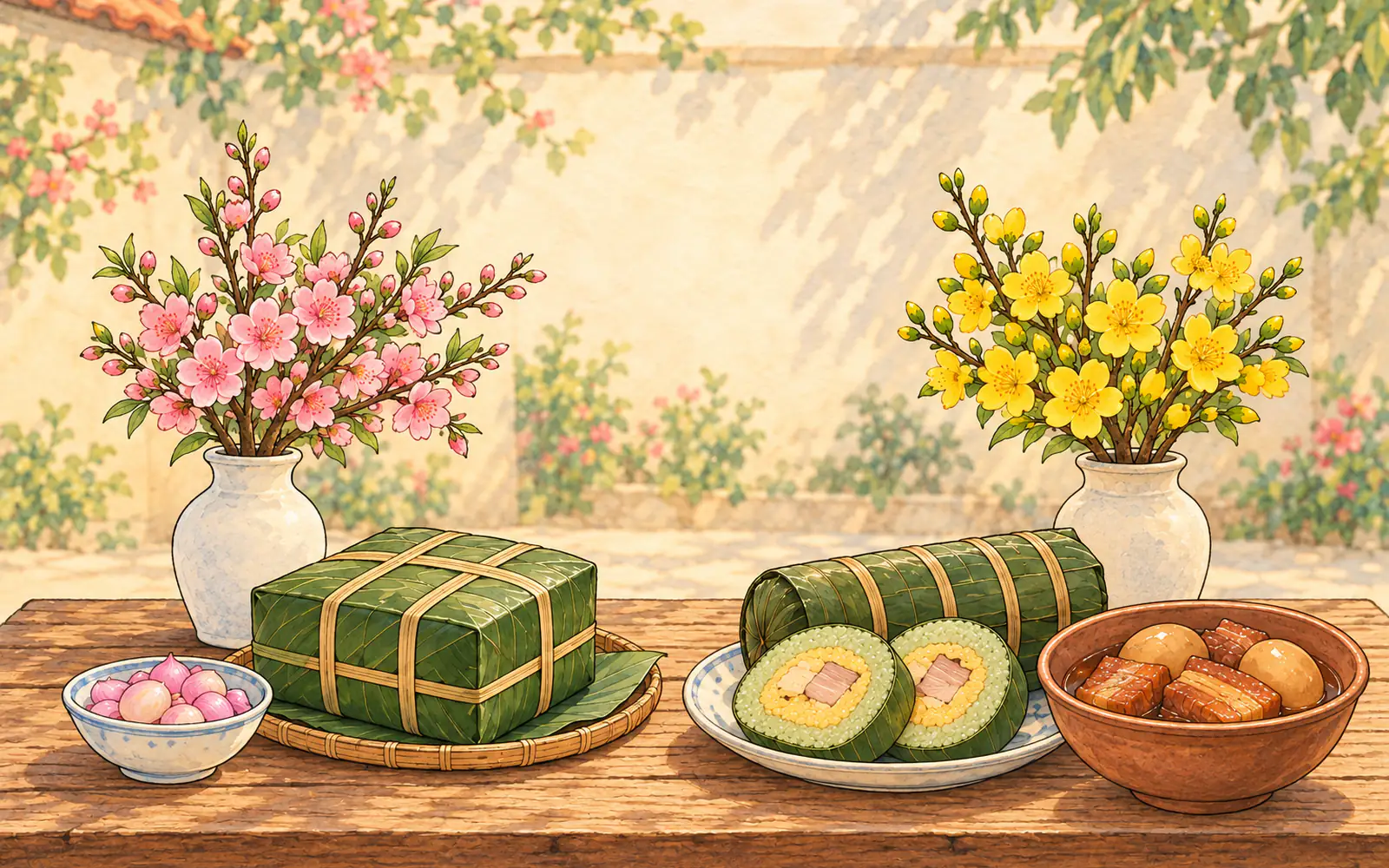
Tết Nguyên Đán is the Vietnamese Lunar New Year, falling on 6 February in 2027 for the Year of the Goat. Many families gather, honor ancestors, and give red envelopes (mừng tuổi or lì xì), while the cooler North displays pink peach blossoms (hoa đào) and square bánh chưng, and the warm South favors yellow hoa mai and cylindrical bánh tét.
Tết is the Vietnamese Lunar New Year, falling on 6 February in 2027 for the Year of the Goat, when many families honor ancestors and exchange wishes and red envelopes. While the cooler North celebrates with pink peach blossoms (hoa đào) and square bánh chưng, the warm South favors yellow hoa mai and cylindrical bánh tét.
Northern and Southern Tết traditions at a glance
Many families gather for Tết Nguyên Đán, prepare ancestor altars, and exchange New Year wishes and lucky money in red envelopes. If you follow the differences between Northern and Southern Vietnamese or the Vietnamese zodiac, you will spot regional contrasts on the holiday table right away.
| Tradition | Northern Vietnam (Hà Nội) | Southern Vietnam (Sài Gòn) |
|---|---|---|
| Blossom | Pink peach blossoms (hoa đào) | Yellow apricot blossoms (hoa mai) |
| Sticky rice cake | Square bánh chưng in dong leaves | Cylindrical bánh tét in banana leaves |
| Festive dishes | Jellied pork (thịt đông), bamboo shoot soup, nem rán, dưa hành | Braised pork with eggs (thịt kho), canh khổ qua, chả giò, củ kiệu |
| Five-fruit tray | Five-element colors: green bananas cradling pomelo or citron | Wordplay (cầu sung vừa đủ xài); bananas avoided |
| Greeting words | Mừng tuổi or lì xì; greet bố mẹ; vâng and a closing ạ are common | Lì xì or mừng tuổi; greet ba má; dạ is the everyday polite opener |
Why the North displays peach blossoms and the South chooses yellow apricot
Tết blossoms shift from pink in the North to yellow in the South due to opposite spring climates. Peach trees (hoa đào) need northern cold weather and struggle to bloom in heat, while yellow apricot trees (hoa mai) thrive in southern year-end warmth of 28°C or higher. In the five elements, crimson-pink hoa đào represents fire in the North (vitality, good luck, and warding off evil spirits), while yellow hoa mai represents earth in the South (wealth and nobility). In everyday speech, you also hear a regional word pair: Northern hoa versus Southern bông (bông mai).
Bánh chưng vs. bánh tét and regional Tết dishes
Both are glutinous rice cakes that differ in shape and wrapper; savory versions commonly include mung beans and pork. Northern families make square bánh chưng in green dong leaves (Stachyphrynium placentarium). In Vietnamese legend, Prince Lang Liêu, 18th son of King Hùng VI, made square bánh chưng and round bánh giầy from glutinous rice to symbolize the earth and sky, winning the throne. Central and southern families make cylindrical bánh tét in banana leaves, in savory and sweet versions. The origin of bánh tét is debated; one theory links it to cultural exchange with the Chăm people.
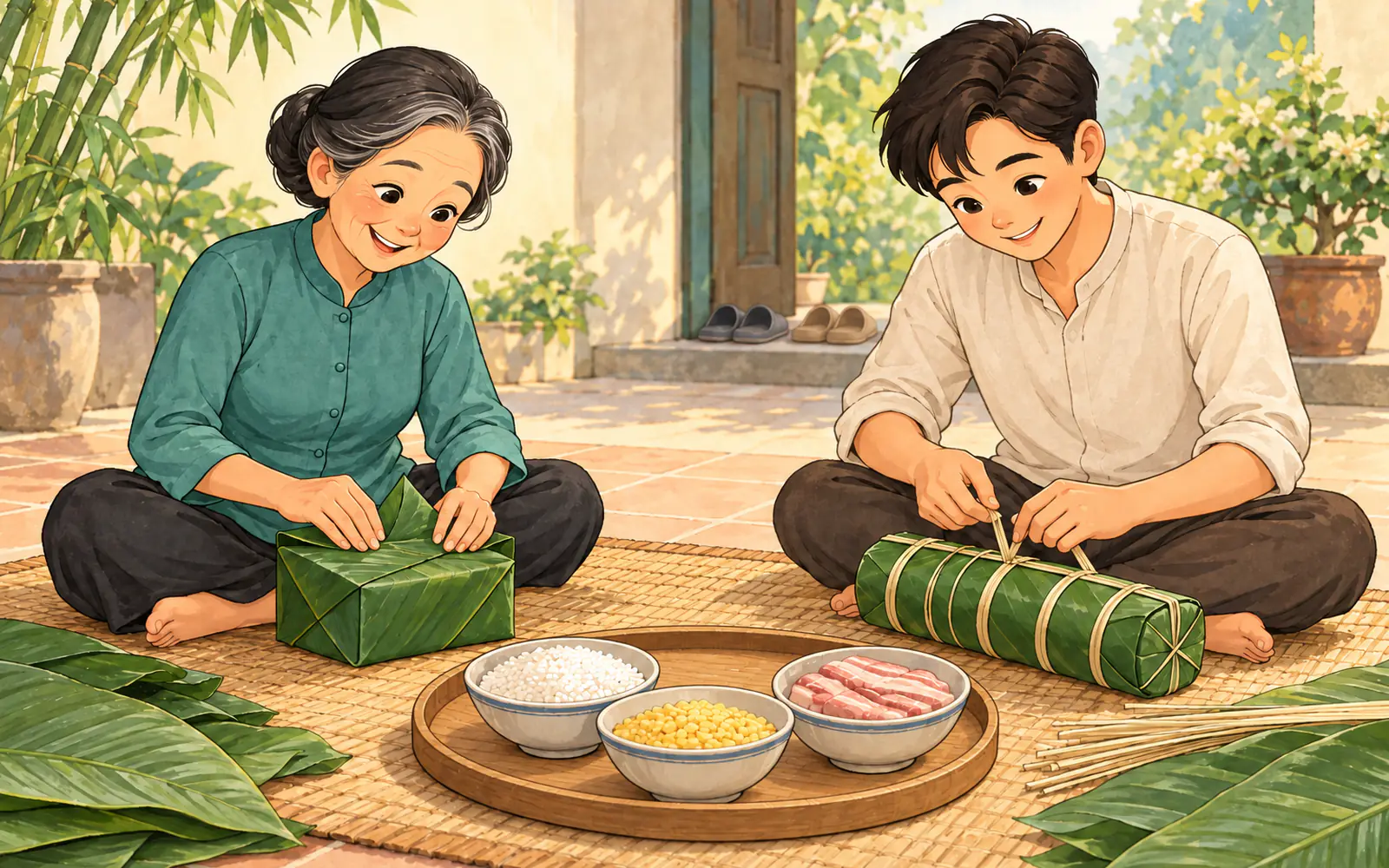
Other festive Tết dishes differ by region. Chilly Northern tables serve thịt đông (jellied pork simmered from pork leg, skin, and wood ear mushrooms), bamboo shoot soup with pork knuckles, nem rán (fried spring rolls), and dưa hành (pickled shallots). Southern tables serve thịt kho (square pork and round duck eggs braised in coconut water and fish sauce for yin-yang balance), canh khổ qua (stuffed bitter melon soup so hardships, khổ, pass, qua), chả giò (fried spring rolls), and củ kiệu (pickled leeks). Pork is thịt lợn in the North and thịt heo in the South.
| Dish | North | South | Note |
|---|---|---|---|
| Rice cake | Square bánh chưng (dong leaves) | Cylindrical bánh tét (banana leaves) | Earth symbol (North); savory or sweet (South) |
| Pork dish | Thịt đông (jellied pork) | Thịt kho (braised pork and eggs) | Cold winter jelly vs. yin-yang square pork and round eggs |
| Soup | Bamboo shoots with pork knuckles | Canh khổ qua (stuffed bitter melon) | Wishes that hardships (khổ) pass (qua) |
| Rolls & pickles | Nem rán and dưa hành | Chả giò and củ kiệu | Crispy rolls and tangy shallots or leeks |
How the five-fruit tray (mâm ngũ quả) differs between North and South
The ancestral mâm ngũ quả (five-fruit tray) contrasts Northern five-element colors with Southern wordplay. Northern trays represent the five elements (ngũ hành) by color, anchored by green bananas cradling a yellow pomelo or Buddha's hand citron alongside red, white, and dark fruits. Southern families often combine soursop (mãng cầu), fig (sung), coconut (dừa), papaya (đu đủ), and mango (xoài) for "cầu sung vừa đủ xài" (praying for enough prosperity to spend comfortably), and avoid bananas (chuối) because the word sounds like chúi (stumbling or struggling). Fruit classifiers also shift from Northern quả to Southern trái, alongside other words that change meaning between the North and South.
The days around Tết in order
- 23rd of the 12th lunar month (Ông Công, Ông Táo): Families bid farewell to Ông Công and Ông Táo (the Land Genie and Kitchen Gods), releasing live carp to carry the deities to heaven to report the year to the Jade Emperor.
- Before and during Tết: Many families prepare an ancestral altar with bánh chưng, boiled chicken, pork sausage (giò lụa), and bamboo shoot soup. Traditional trays often left out beef.
- After midnight (xông đất): Under first-footing (xông đất), the first visitor after midnight is believed to shape the home's luck for the year, so hosts often invite a compatible person in advance.
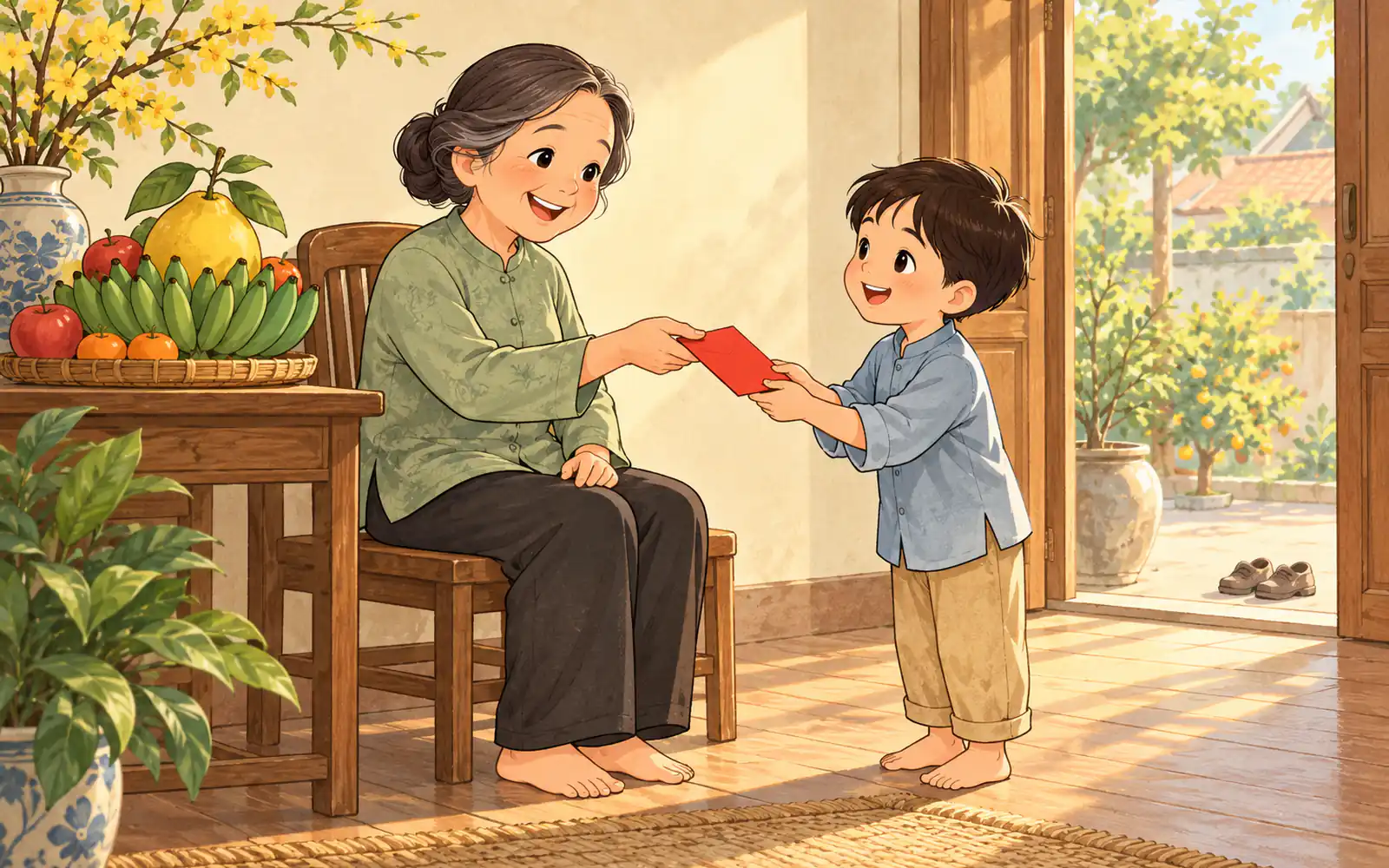
- New Year's Day (6 February 2027) onward: Opening the Year of the Goat in 2027, many families gather, exchange wishes, and give lucky money in red envelopes to wish children good growth and elders longevity.
What to say during Tết in Northern and Southern Vietnamese
Three standard Tết wishes work nationwide: "Chúc mừng năm mới!" (Happy New Year!), "Chúc vạn sự như ý!" (May everything go as you wish!), and "Chúc an khang thịnh vượng!" (Wishing you good health and prosperity!). Lucky money in red envelopes is called mừng tuổi ("congratulation on a new age") or lì xì (the Southern dialect word); both are widely used. When greeting family—useful when meeting a Vietnamese partner's family—grandparents are ông bà and older siblings are anh chị, while parents are bố mẹ in the North and ba má in the South. For polite markers, dạ is the everyday polite opener in the South and is heard in the North too, where vâng and a closing ạ are common.
| Use | Northern (Hà Nội) | Southern (Sài Gòn) | Meaning |
|---|---|---|---|
| To grandparents | Cháu chúc ông bà năm mới an khang thịnh vượng ạ! | Dạ, con chúc ông bà năm mới an khang thịnh vượng ạ! | Wishing Grandma and Grandpa health and prosperity! |
| To parents | Con chúc bố mẹ năm mới vạn sự như ý ạ! | Dạ, con chúc ba má năm mới vạn sự như ý ạ! | Wishing Mom and Dad that all goes as you wish! |
| Inviting in | Mời anh chị vào nhà ăn Tết ạ! | Mời anh chị vô nhà ăn Tết nha! | Please come inside and celebrate Tết! |
Compare a New Year's morning exchange:
- N: Bố mẹ ơi, năm mới chúng con chúc bố mẹ vạn sự như ý ạ! — Bố mẹ cảm ơn các con, bố mẹ mừng tuổi hai đứa nhé!
- S: Dạ, ba má ơi, năm mới tụi con chúc ba má vạn sự như ý ạ! — Ba má cảm ơn tụi con, ba má lì xì hai đứa nha!
Visit customs a guest should know
- Ask before arriving early on New Year's Day: Hosts often pre-invite a guest for xông đất (first-footing after midnight), so check when to visit on the first morning.
- Share wishes with elders: Greet ông bà and bố mẹ or ba má, and pair mừng tuổi or lì xì envelopes with wishes for children's growth and elders' longevity.
- Respect altar and fruit customs: Traditional altar trays may include bánh chưng, boiled chicken, giò lụa, and bamboo shoot soup; beef was traditionally left out. Southern Tết five-fruit trays often leave out bananas (chuối) because the word sounds like chúi (stumbling).
How to join in as a learner
One polite wish in your host family's dialect, said aloud, goes a long way. Matching everyday Vietnamese greetings and politeness—such as bố mẹ in the North or ba má in the South—shows care for the people welcoming you.
Deciding which city and dialect to learn for? Read Hà Nội vs Sài Gòn: which city and dialect to learn for.
Key takeaways
- Flowers reflect climate; dishes differ by region: Northern families often display pink hoa đào and serve square bánh chưng and thịt đông; Southern families often display yellow hoa mai and serve cylindrical bánh tét and thịt kho.
- Five elements vs. wordplay: Northern mâm ngũ quả trays arrange green bananas and pomelo by color; Southern trays combine five fruits for "cầu sung vừa đủ xài" and avoid bananas.
- Shared wishes, regional address: A standard wish is "Chúc mừng năm mới!". Both mừng tuổi and lì xì name the red-envelope custom; parents are bố mẹ in the North and ba má in the South.
Learn the words to greet family in Northern or Southern Vietnamese
Greeting elders at Tết with ông bà, Northern bố mẹ, or Southern ba má is a meaningful reason to start learning. For Southern speech, start with Everyday Southern Vietnamese, Level 00, an interactive textbook course built on SVFF lessons that follows Ben in Sài Gòn and covers the tones, Southern final consonants, greetings, and address words, or Slow Vietnamese 01 - Southern, a beginner video course where dialogues move gradually from slow to normal speed.
For Northern speech, explore Everyday Northern Vietnamese, Level 01 (in Beta, with some parts such as audio still being added), following Lucia in Hà Nội through introductions with anh, chị, em, and bác, or Slow Vietnamese 01 - Northern. To practice aloud, meet our tutors and book a trial lesson.
Frequently asked questions
When is Tết in Vietnam in 2027?
In 2027, Vietnamese Lunar New Year's Day (Tết Nguyên Đán) falls on 6 February, starting the Year of the Goat.
What is the difference between bánh chưng and bánh tét?
Both are glutinous rice cakes: bánh chưng is square and commonly Northern, wrapped in green dong leaves; bánh tét is cylindrical and common in Central and Southern Vietnam, wrapped in banana leaves and made in savory or sweet versions.
Why do Northern families display hoa đào and Southern families display hoa mai for Tết?
Pink peach blossoms (hoa đào) need northern winter cold and represent fire for good luck and vitality, while yellow apricot blossoms (hoa mai) thrive in southern heat of 28°C or higher and represent earth for wealth and nobility.
Do you say mừng tuổi or lì xì for Tết red envelopes?
Both refer to giving lucky money in red envelopes for children's growth and elders' longevity: mừng tuổi means "congratulation on a new age," lì xì is the Southern dialect word, and both are widely used.
Why do Southern families leave bananas off the Tết five-fruit tray?
Northern families use green bananas as the base of the mâm ngũ quả tray, while Southern families avoid bananas (chuối) because the word sounds like chúi (stumbling).


Comments (0)
A new word, a question, or a different perspective? Share it with fellow learners.
Be the first to comment.