Key takeaway
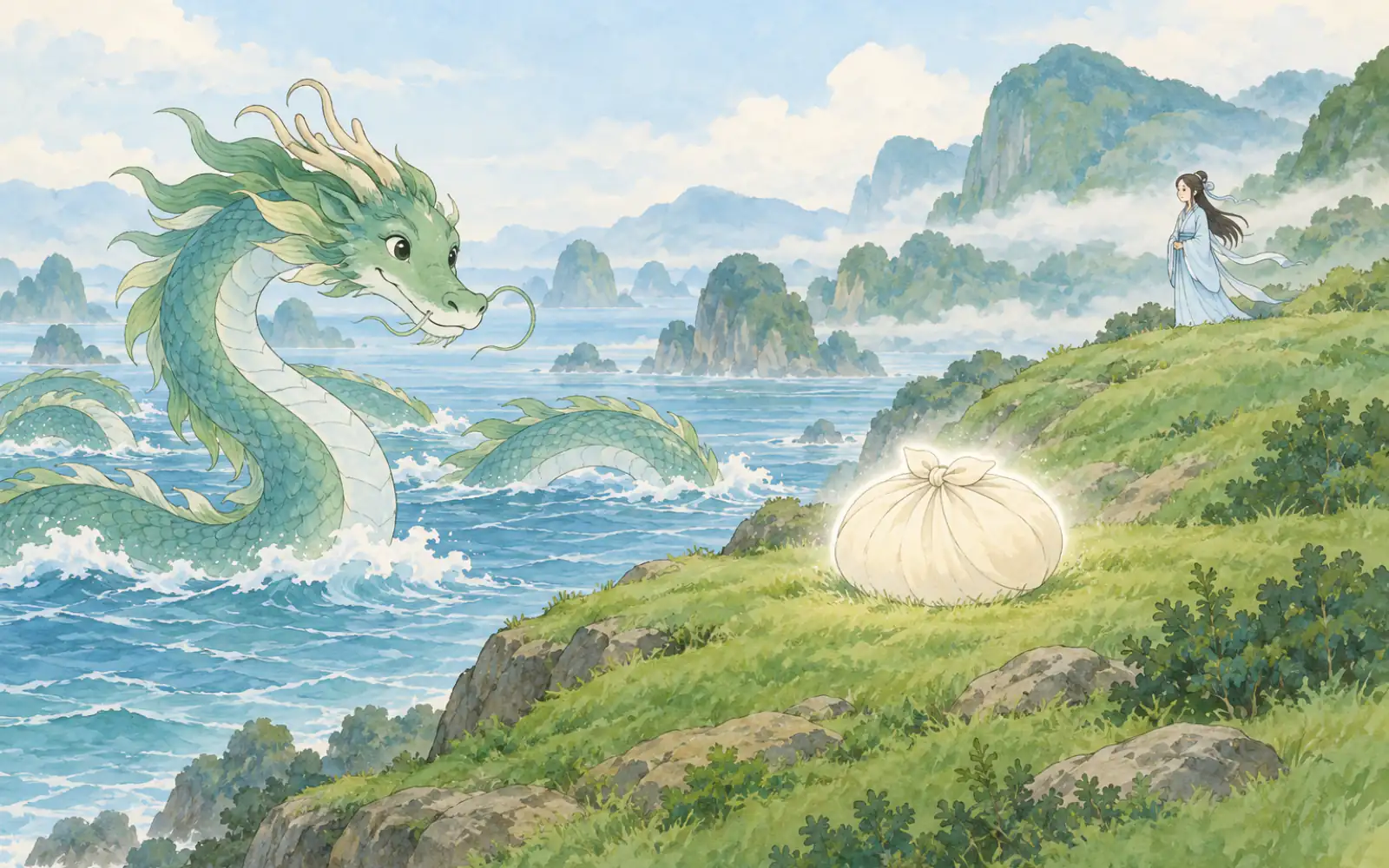
Lạc Long Quân and Âu Cơ are the dragon father and fairy mother in a Vietnamese origin legend. Their hundred eggs hatch into children who share a beginning, then live by the sea and in the mountains. The phrase con Rồng cháu Tiên recalls that shared origin. This is a folk story, and details vary between tellings.
Lạc Long Quân and Âu Cơ are the dragon lord and fairy mother in a Vietnamese origin legend, whose hundred eggs hatch into the children seen as ancestors of the Vietnamese people. The phrase con Rồng cháu Tiên means children of the Dragon, grandchildren of the Fairy, and expresses that shared legendary origin.
A family from the sea and the mountains
In a commonly known telling, Lạc Long Quân belongs to the dragon world and is linked to the sea. Âu Cơ belongs to the fairy world and is linked to the mountains. They meet, become a couple, and begin a family unlike an ordinary human family.
Âu Cơ gives birth to a sac containing a hundred eggs. The eggs hatch into a hundred sons, who grow strong. The unusual birth is the heart of the story: the children share an origin before they live in different places.
It is a legend: a memorable story about where a community comes from. Folk stories vary between tellings, so a version you hear at home may use different details.
The children go in different directions
The parents find that their different natures draw them towards different homes. Lạc Long Quân is linked to the water, while Âu Cơ is linked to the land and mountains. They decide to separate and divide the children between them.
Fifty sons follow their father towards the sea, and fifty stay with their mother in the mountains. Although they live apart, they remain part of the same family. The separation explains difference within the larger story of a shared beginning.
In the familiar account, the eldest son becomes the first Hùng King, linked to the realm called Văn Lang. This connects the family story with a traditional story about the beginnings of kingship.
What con Rồng cháu Tiên means
The phrase con Rồng cháu Tiên can be translated closely as children of the Dragon, grandchildren of the Fairy. In natural English, descendants of the Dragon and the Fairy carries the broader idea. It points back to the parents in the legend.
The words for child and grandchild work together here. Do not read them as a careful family chart in which the dragon is exactly one generation closer than the fairy. The whole phrase celebrates descent from both figures.
You may meet the phrase in writing about Vietnamese identity and shared roots. It is not a usual replacement for a person's nationality in an everyday introduction. Learn it as a cultural expression whose meaning is larger than the separate words.
Words that help you follow the story
| Vietnamese | Meaning here | Story connection |
|---|---|---|
| rồng | dragon | The dragon side of the shared origin |
| tiên | fairy; an immortal being | The fairy side of the shared origin |
| con | child; offspring | Here it describes descent, not an address to a parent |
| cháu | grandchild; descendant | Here it points to later generations |
| trứng | egg | The children come from a miraculous clutch of eggs |
| biển | sea | The home linked to the dragon father |
| núi | mountain | The home linked to the fairy mother |
| đồng bào | compatriots; people of the same country | Often explained through the image of a shared birth sac |
| Hùng Vương | Hùng King | The royal title linked to the eldest son in the story |
| Văn Lang | Văn Lang, the realm named in the legend | A name in the traditional account |
The everyday meaning of a word may be wider than its job in this story. The word for child, for example, can also be used by a child speaking to a parent. Here the family words explain descent, so there is no speaker choosing how to address another person.
The image of a shared birth
The word đồng bào is often explained through the idea of people born from the same sac. That image fits the story of the eggs and the shared mother. In use, the word refers to fellow people of a country, rather than only to relatives in one household.
The story holds together both closeness and distance. The children do not all remain beside the same parent or in the same landscape. Yet the beginning of the story gives them a bond that distance does not remove.
A gentle way to read and retell it
Start by following the family rather than trying to remember every unfamiliar name. Identify the parents, the shared birth, and the later separation. Then explain why the children still belong to the same family.
Try a short English retelling before reading a longer Vietnamese version. Keep the main events and leave out details you cannot check. If another telling changes a detail, ask how that version was told rather than deciding at once that it is wrong.
Frequently asked questions
Who are Lạc Long Quân and Âu Cơ?
They are the dragon father and fairy mother in a Vietnamese origin legend. In the familiar version, their children become the ancestors of the Vietnamese people. Their different links to the sea and mountains help explain why the family later lives in different places.
What does con Rồng cháu Tiên mean?
It means children of the Dragon, grandchildren of the Fairy, or more broadly descendants of the Dragon and the Fairy. The expression refers to the parents in the legend and a shared Vietnamese origin. Read the whole phrase together rather than as a precise family chart.
Did Âu Cơ give birth to eggs?
Yes, in the legend she gives birth to a sac holding a hundred eggs, which hatch into a hundred sons. This is a miraculous event within a Vietnamese folk story.
Why do the parents separate?
In the familiar telling, their different natures suit different homes: the dragon father is linked to the sea, and the fairy mother to the mountains. Fifty children follow each parent. Their separation changes where the children live while keeping their shared family origin.
Is this legend a history lesson?
It is a cultural origin story, not a verified account of every event it describes. Names such as Hùng Vương and Văn Lang connect it with traditional accounts of early Vietnam. Read it for its meaning, and remember that details vary between tellings.
Next step
Build a foundation in Vietnamese before you try a longer retelling of the legend.
More: Vietnamese legends · Vietnamese myths
Editorial note
Prepared with AI assistance and checked by a second model for natural Vietnamese. Folk stories vary between tellings; this retelling follows a commonly known version.

Comments (0)
A new word, a question, or a different perspective? Share it with fellow learners.
Be the first to comment.