
Key takeaway
Learn the Vietnamese dialect of the city where your people, work, or family are: Northern for Hà Nội (six spoken tones, words like bố mẹ and bát) or Southern for Sài Gòn / Ho Chi Minh City (five spoken tones, words like ba má and chén). Both varieties are respected and fine to learn, and speakers generally understand each other.
Learn the Vietnamese dialect of the city where your people, work, or family are, whether that is Hà Nội in the North or Ho Chi Minh City (Sài Gòn) in the South. Both dialects are respected and structurally equal models that are fine to learn, and speakers generally understand each other in everyday conversation.
| Feature | Hà Nội (Northern) | Sài Gòn / Ho Chi Minh City (Southern) |
|---|---|---|
| Role and standing | National capital on the Red River Delta with a distinguished cultural reputation | Regarded as Vietnam's largest economic and technological center |
| Seasons and weather | Humid subtropical climate with four seasons, including a cool, dry winter (December–February) | Tropical monsoon climate with two seasons: rainy (May–October) and dry (November–April) |
| Spoken tones | Six spoken tones; hỏi and ngã stay distinct, combining pitch with voice quality | Five spoken tones (hỏi and ngã merge); relies mostly on pitch |
| Key sound cues | Initial d, gi, and often r sound like English z; tr/ch and s/x merge; finals -n/-ng and -t/-c stay distinct | Initial d, gi, and often v sound like English y; finals -n and -t often sound like -ng and -c after some vowels |
| Everyday words | bố mẹ (parents), bát (bowl), cốc (glass), vào (enter), nghìn (thousand), nhé (particle) | ba má (parents), chén (bowl), ly (glass), vô (enter), ngàn (thousand), nha (particle) |
| Street habits | Associated in local media with sidewalk iced-tea stalls (trà đá vỉa hè) | Described by local media as a late-night metropolis known for iced coffee and pre-dawn markets |
| Everyday food | Clearer phở broths with restraint in herbs or sweet sauces; guides list bún chả as iconic | Sweeter flavors and generous greens with phở; guides link cơm tấm with the city |
Ho Chi Minh City, Sài Gòn, and Hà Nội: How the Two Cities Compare
Searching for Hà Nội vs Ho Chi Minh City or Hà Nội vs Sài Gòn points to the same Southern metropolis under two names. Lawmakers officially renamed Sài Gòn – Gia Định as Thành phố Hồ Chí Minh (Ho Chi Minh City) at the first session of the sixth National Assembly on 2 July 1976, while Sài Gòn remains common in everyday speech and in English-language Vietnamese media such as VnExpress International. This guide uses Sài Gòn alongside Ho Chi Minh City to match daily speech.
Hà Nội, named in 1831 with the meaning "inside the rivers," is the national capital. In linguistic research on teaching Vietnamese, Sài Gòn is regarded as the country's largest economic and technological center, while Hà Nội holds a distinguished reputation on the Red River Delta.
Everyday Words in Hà Nội and Sài Gòn
Northern and Southern speakers share core grammar and most written vocabulary, yet use different words for common household items, family members, and daily actions. A study of Northern and Southern expressions for foreign learners notes that native speakers from both regions generally understand each other, while learners who have studied one dialect often find the other challenging at first because of vocabulary and accent differences.

| Meaning | Hà Nội (Northern) | Sài Gòn (Southern) |
|---|---|---|
| Parents | bố mẹ | ba má |
| Small bowl | bát | chén |
| Glass / cup | cốc | ly |
| Spoon | thìa | muỗng |
| To enter | vào | vô |
| To turn (on a street) | rẽ | quẹo |
| Expensive | đắt | mắc |
| Thousand | nghìn | ngàn |
Food errands also use regional words such as quả dứa (N) vs trái thơm (S) for pineapple and ngô (N) vs bắp (S) for corn, while ốm means "sick" in the North (Southern bệnh or đau) and "thin" in the South (Northern gầy). See fifty more examples in our guide to everyday Northern and Southern Vietnamese words.
Polite words and sentence endings also shape each city's daily rhythm. In research on Vietnamese linguistic politeness, dạ is the everyday polite opener in the South and is heard in the North too, where vâng and a closing ạ are common. Speakers often end a friendly suggestion with nhé in the North and nha (or nghe) in the South; to ask someone to slow down, say "Anh nói chậm lại một chút được không ạ?" in the North and "Anh nói chậm lại chút giùm em nha." in the South. Casual Southern speech among peers also uses tui for "I/me" and tụi mình for "we/us."
Accent and Tones as a Learner Hears Them
Vietnamese schools teach Standard Vietnamese based on the Northern dialect, while linguistic research shows that the Hà Nội and Sài Gòn dialects are structurally equal and socially adequate models for learning. Standard spelling has six written tone categories—five marks plus the unmarked ngang tone (ngang, huyền, sắc, hỏi, ngã, and nặng)—and Hà Nội speech keeps all six distinct, combining pitch with voice quality. Sài Gòn speech merges hỏi and ngã into five spoken tones and relies mostly on pitch; hear every tone in our Vietnamese tones guide.
| Sound feature | Hà Nội (Northern) | Sài Gòn (Southern) |
|---|---|---|
| Spoken tones | Six distinct tones; pitch plus voice quality | Five spoken tones (hỏi and ngã merge); relies mostly on pitch |
| Initial v | Sounds like English v (về) | Often sounds like English y |
| Initial d, gi, and r | Usually share an English z-like sound | d and gi sound like English y; r varies |
| Initial tr/ch and s/x | tr and ch sound the same in modern Hà Nội speech, and s and x too | Often kept distinct, though casual speech may merge them |
| Word-final -n/-ng and -t/-c | Kept distinct | Final -n and -t often sound like -ng and -c after some vowels |
As described in a review of consonants, vowels, and tones across Vietnamese dialects, these shifts follow regular regional patterns while spelling stays identical. See our Southern vs Northern Vietnamese comparison for full sound detail.
Daily Life, Climate, and Food in Hà Nội and Sài Gòn
According to a VnExpress International travel guide, Northern Vietnam—including Hà Nội—has a monsoonal and humid subtropical climate with four distinct seasons: spring, summer, autumn, and a cool, dry winter from December to February. Southern Vietnam—including Ho Chi Minh City—has a warm, humid tropical monsoon climate with two seasons: rainy from May to October and dry from November to April.
VnExpress International describes Hà Nội as inseparable from its sidewalk iced-tea stalls (trà đá vỉa hè), where residents sit to sip tea and talk, while noting that Sài Gòn is synonymous with iced coffee. In a piece promoting its midnight marathon, VnExpress calls Sài Gòn a "city that never sleeps," describing an active late-night metropolis where young people gather for coffee around midnight and vendors prepare noodle stock and morning market goods before dawn. In practice, a slower or faster rhythm depends on your neighborhood and routine rather than a rule for everyone in either city.
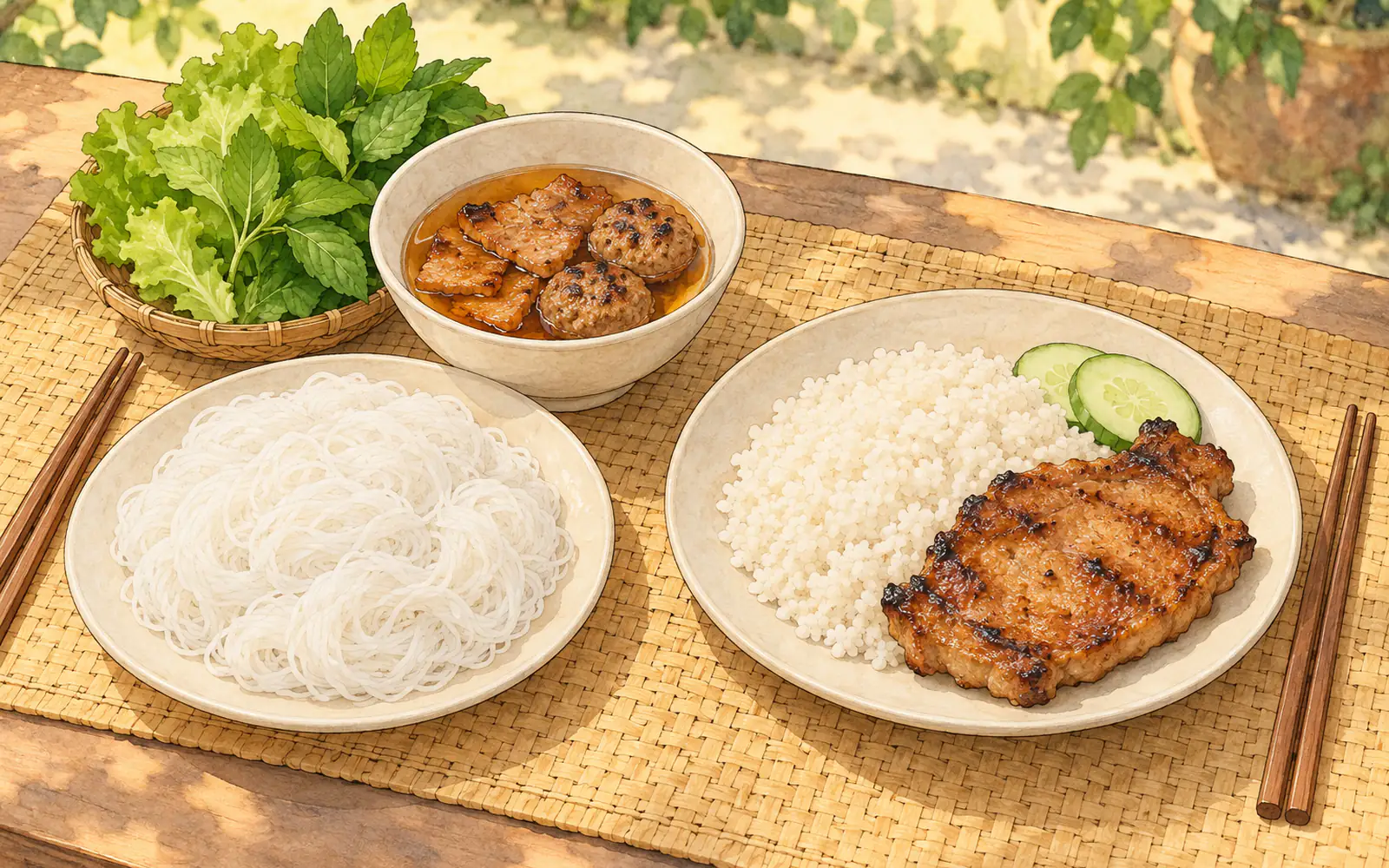
In explaining how the two cities serve phở, VnExpress International notes that Sài Gòn phở tends to have sweeter broth and more fresh greens and herbs, whereas Hà Nội phở tends to have clearer broth and fewer added herbs or sweet sauces; see our guide to Hà Nội vs Sài Gòn phở. The VnExpress travel guide also lists bún chả (grilled pork and meatballs with white vermicelli in fish sauce) as an iconic Hà Nội dish and associates cơm tấm (broken rice with grilled pork) with Ho Chi Minh City. For a separate look at Tết, see Tết in Northern and Southern Vietnam.
How to Choose Between Hà Nội and Sài Gòn by Your Goal
Because speakers of both dialects generally understand each other, choose your starting dialect around the city and people connected to your life. For a wider overview including Central Vietnam, see which Vietnamese dialect to learn.
- Family or a partner: Learn the dialect your relatives or partner speak at home. Ask which words they use for parents (bố mẹ or ba má) rather than inferring a person's dialect from their current address.
- Work: Choose the dialect of the city where your colleagues are based—Northern for Hà Nội or Southern for Ho Chi Minh City.
- Travel: Start with Hà Nội for a Northern trip or Sài Gòn for the South; for a cross-country route, pick either dialect as your base and learn a few menu words from the other city.
- No specific reason yet: Picture which city setting draws your interest more—such as cool winter mornings by Hà Nội's sidewalk tea stalls or year-round tropical evenings in Sài Gòn—and commit to that city's model first.
Key Takeaways
- Ho Chi Minh City has been the official administrative name since 2 July 1976, while Sài Gòn remains widely used in everyday speech.
- Both the Hà Nội and Sài Gòn dialects are structurally equal and socially adequate models, and speakers generally understand each other.
- Hà Nội speech distinguishes all six written tone categories and keeps final -n/-ng and -t/-c separate, while Sài Gòn speech merges hỏi and ngã into five spoken tones and often merges those finals after some vowels.
- Everyday words differ across common items—such as bát vs chén (bowl), cốc vs ly (glass), and nghìn vs ngàn (thousand).
- Choose your dialect based on where your family, partner, or colleagues are located.
Start Learning for Hà Nội or Sài Gòn
Turning your curiosity about Hà Nội and Sài Gòn into real conversations starts with lessons that match your city. For Hà Nội, begin with Everyday Northern Vietnamese, Level 01 (in Beta) and pair it with the Slow Vietnamese 01 - Northern video course to hear beginner conversations move from reduced speed to normal speed.
For Sài Gòn, begin with Everyday Southern Vietnamese, Level 00—which covers the tones, Southern final consonants, greetings, and ordering drinks—alongside the Slow Vietnamese 01 - Southern video course. For live one-to-one speaking practice in either dialect, work with our tutors or book a trial lesson.
Frequently Asked Questions
Are Ho Chi Minh City and Sài Gòn the same place?
Yes. Lawmakers officially renamed Sài Gòn – Gia Định as Ho Chi Minh City (Thành phố Hồ Chí Minh) on 2 July 1976, while Sài Gòn remains widely used in everyday speech and in English-language Vietnamese media.
Can people in Hà Nội and Sài Gòn understand each other?
Yes. Linguistic research confirms that native speakers of Northern and Southern Vietnamese generally understand each other in conversation, though foreign learners who have studied one dialect often need time to adjust to the other region's accent and everyday word pairs.
Is the Hà Nội or Sài Gòn dialect easier for beginners to learn?
Neither dialect is objectively easier or harder overall. Sài Gòn speech has five spoken tones because hỏi and ngã merge, whereas Hà Nội speech keeps all six tones distinct and uses voice quality alongside pitch, and each dialect has its own consonant mergers and everyday words.
Can I use Southern Vietnamese in Hà Nội, or Northern Vietnamese in Sài Gòn?
Yes. Northern and Southern speakers generally understand each other, so you can use either dialect in either city. Allow for unfamiliar accents and everyday words, especially when you are starting out.
Do Hà Nội and Sài Gòn use different Vietnamese writing or grammar?
No. Both cities use the same standard Vietnamese alphabet, six written tone categories (five marked and one unmarked), and core grammar in books, newspapers, and official writing; the differences appear in spoken pronunciation, everyday word pairs, and conversational particles.




Comments (0)
A new word, a question, or a different perspective? Share it with fellow learners.
Be the first to comment.