Key takeaway
A 2018 report identifies more than 500 common Vietnamese words with French roots; other sources give larger figures for historical borrowings. These words cluster in food (cà phê, bơ, phô mai), clothing (áo sơ mi, va li), housing (ban công, xà phòng / xà bông), and transport (xe ô tô, nhà ga). The borrowed words were adapted to Vietnamese syllables and tones.
Everyday Vietnamese uses many French loanwords adapted to Vietnamese syllables and tones, from cà phê (coffee, from café) and bơ (butter, from beurre) to áo sơ mi (shirt, from chemise) and nhà ga (train station, from gare). Written phonetically in the Vietnamese alphabet, these familiar words give beginners practical vocabulary from day one.
| Feature | How it works in Vietnamese | Examples |
|---|---|---|
| Published counts | About 3,000 historical borrowings in one study; more than 2,000 phonetic borrowings in a news article; over 1,000 in one research dataset; more than 500 common words in another news article | cà phê, xi măng, ban công, búp bê |
| Main areas | Food, clothing, household items, construction, transport, machinery, entertainment, measurements | bơ, áo sơ mi, xà phòng, xe ô tô, xiếc |
| Syllables and tones | Reshaped into separate Vietnamese syllables (or occasional hyphens) with Vietnamese tones | phó mát / phô mai from fromage; sô cô la from chocolat |
| Category words | Paired with a native classifying noun before or after the loan | (áo) sơ mi, (xe) mô tô, (nhà) ga, ve (áo) |
| Doublets and dialects | Some words have two variants; Hà Nội and Sài Gòn speakers apply regional consonant and tone patterns | xà phòng / xà bông, phó mát / phô mai, va li, cà rốt |
How many French words are in Vietnamese, and why do estimates differ
The figures answer different questions: one study cites about 3,000 historical borrowings, a news article says more than 2,000 words were borrowed through phonetic transcription, a research dataset contains over 1,000 loans, and another news article mentions more than 500 common words.
Linguist Nguyễn Văn Khang (2007), cited in a 2021 Journal of Universal Language study, estimates about 3,000 borrowed words historically, though many are no longer widely used. A 2021 VnExpress report states that Vietnamese borrowed over 2,000 words from French via phonetic transcription, including xi măng (cement), nhà ga (train station), xà phòng (soap), and ghi-đông (handlebars).
Linguists Yoonjung Kang, Andrea Hòa Phạm, and Benjamin Storme (2015) compiled over 1,000 French loanwords from three dictionaries, checked with Hà Nội and Sài Gòn speakers. A 2018 Vietnam News report notes more than 500 common French loanwords, including ban công (balcony), pa tê (pâté), búp bê (doll), xăng đan (sandals), and xiếc (circus). In Vietnamese: An Essential Grammar (Routledge, 2021), Binh Ngo adds that while some earlier loans became obsolete, many remain frequent. For word-for-word loan translations, see Vietnamese calque words from French and English.
20 everyday French loanwords in Vietnamese
These 20 words are documented across reference works and news reports, including the World Loanword Database. Parentheses show the Vietnamese classifying word.
| Vietnamese | French source | English meaning |
|---|---|---|
| cà phê | café | coffee |
| bơ | beurre | butter |
| phó mát / phô mai | fromage | cheese |
| pa tê | pâte | pâté |
| giăm bông | jambon | ham |
| sô cô la | chocolat | chocolate |
| cà rốt | carotte | carrot |
| su su | chouchou | chayote |
| (rượu) vang | vin | wine |
| (áo) sơ mi | chemise | shirt |
| (áo) vét | veste | jacket |
| (dép) xăng đan | sandale / sandales | sandals |
| va li | valise | suitcase |
| xà phòng / xà bông | savon | soap |
| ban công | balcon | balcony |
| xi măng | ciment | cement |
| búp bê | poupée | doll |
| (xe) ô tô | automobile | automobile |
| (nhà) ga | gare | railroad station |
| pin | pile | battery |
Note two look-alikes that trace to English in Binh Ngo's grammar: bít tết (steak) comes from English beef steak, and (quần) soóc (shorts) comes via short from English shorts.
Which areas of life French loanwords cluster in
Research in the Journal of Universal Language (2021) shows that colonial-era French loanwords cluster in seven fields: food, fashion, construction, transportation, machinery, entertainment, and units of measurement. Binh Ngo (2021) groups active loans into food, garments and household items, technology and transportation, cultural items, and measurements:
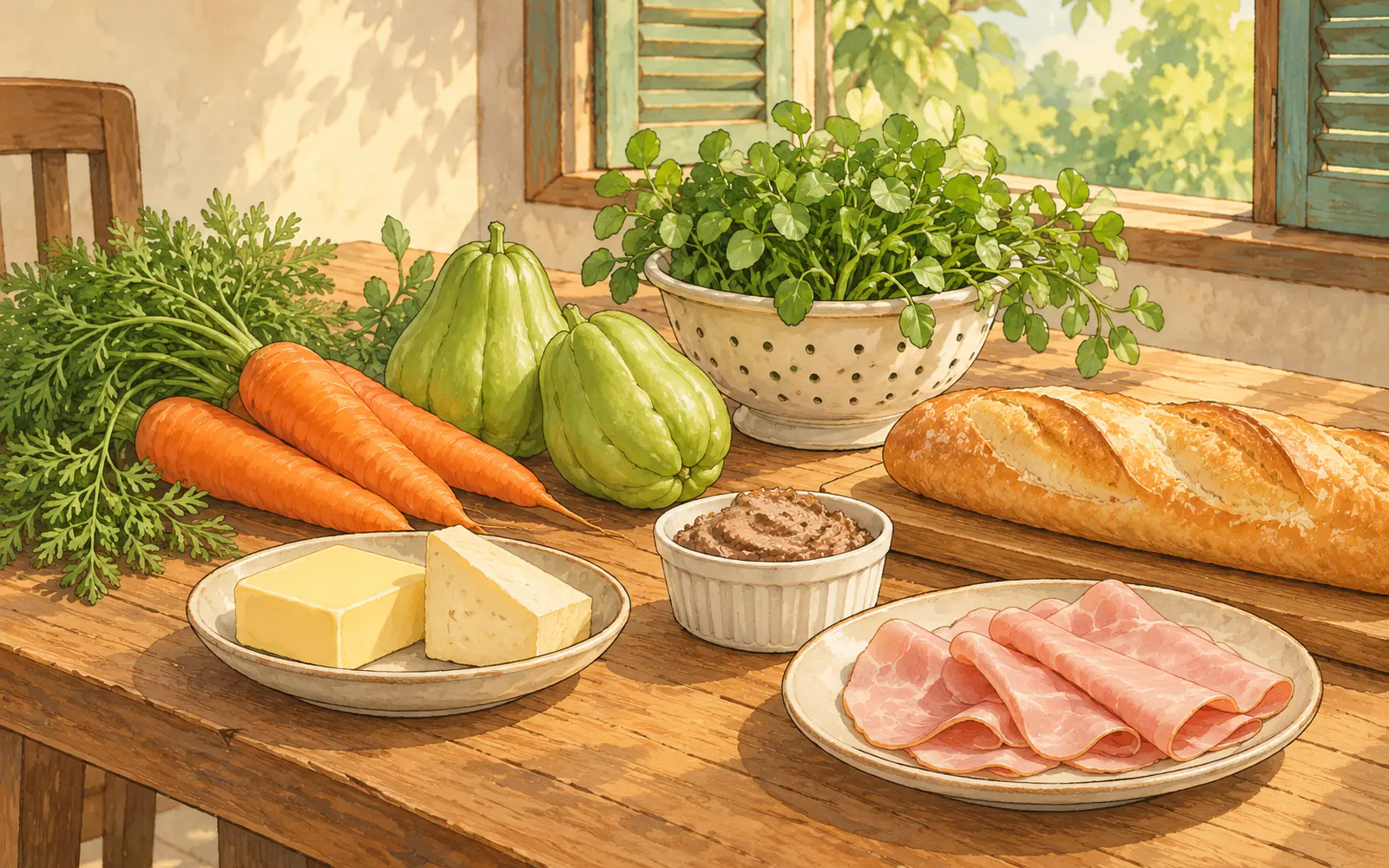
- Food, drinks, and vegetables: Food and drink words (cà phê, bơ, phô mai, pa tê, giăm bông, sô cô la, rượu vang) plus vegetables like cà rốt, su su, and cải xoong (watercress, from cresson). See them in Vietnamese breakfast in Hà Nội, Huế, and Sài Gòn and Vietnamese food vocabulary.
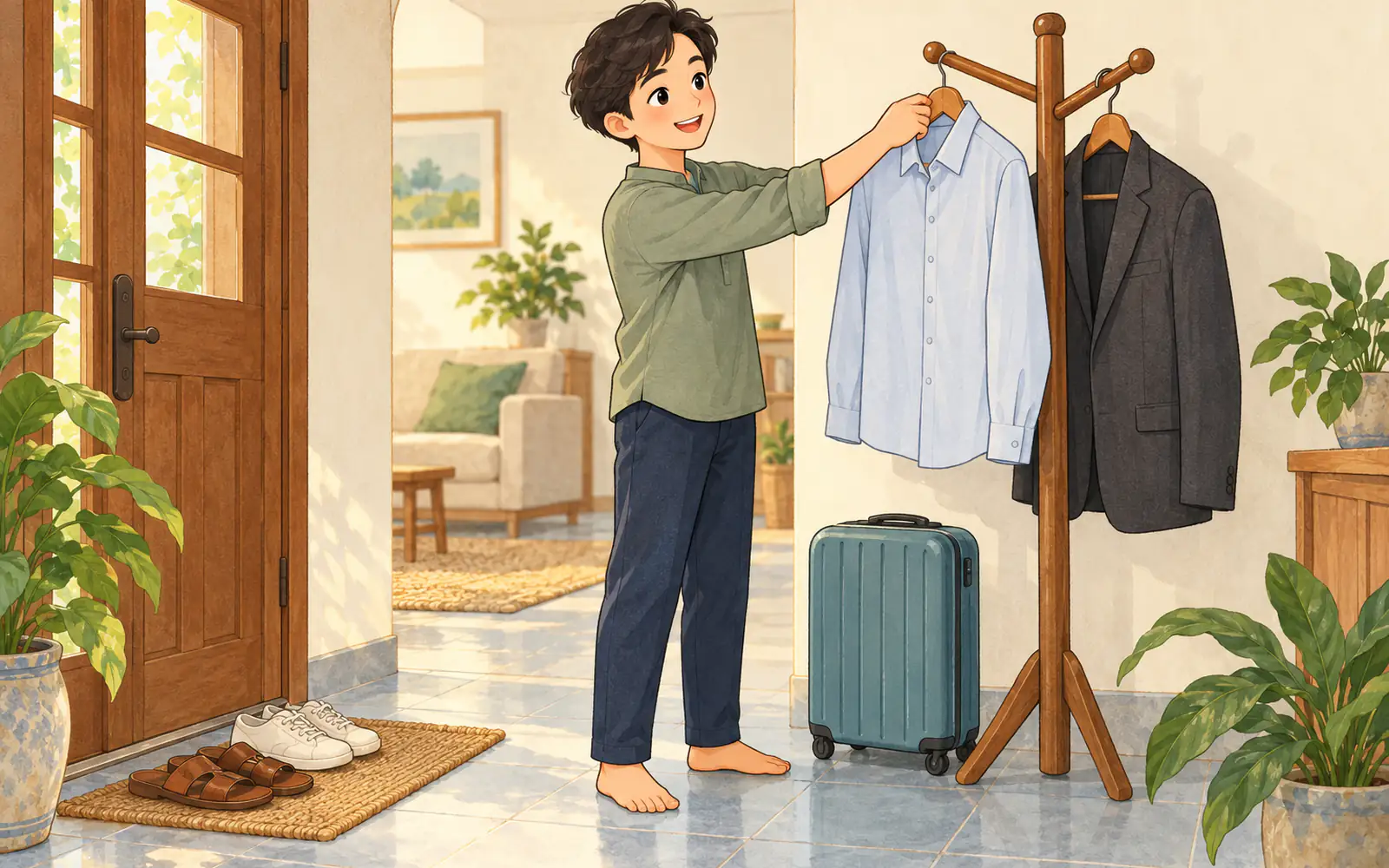
- Clothing and accessories: Wardrobe items including (áo) sơ mi, (áo) vét, (dép) xăng đan, va li, and ve (áo) (lapel, from revers).
- Home, construction, and entertainment: Household and cultural words including xà phòng / xà bông, xô (bucket, from seau), ban công, xi măng, búp bê, and xiếc (circus, from cirque).
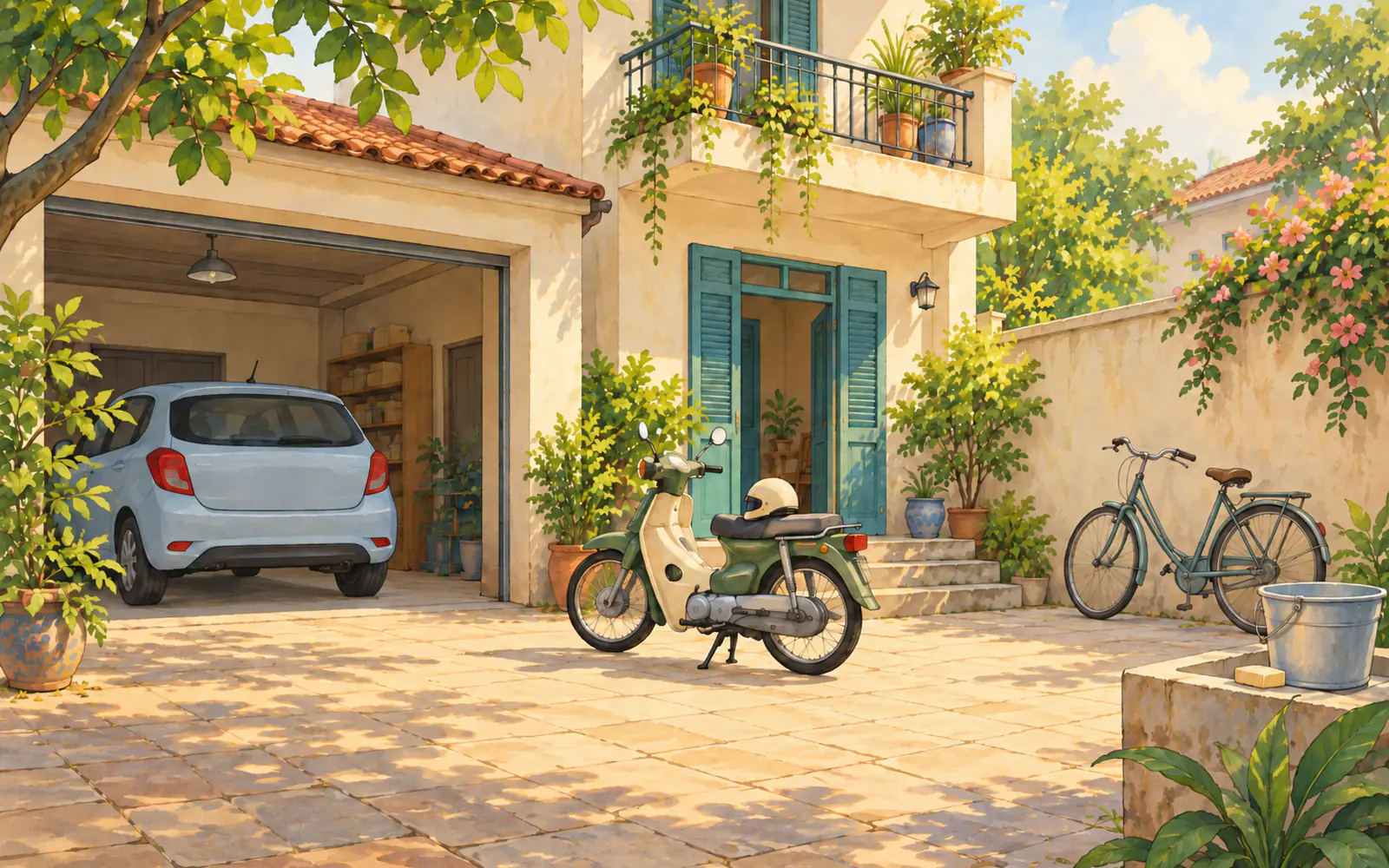
- Transportation and machinery: Road and rail terms including (xe) ô tô (recorded in the World Loanword Database as a Modern Era spoken borrowing), (xe) mô tô (from moto, motocyclette), (nhà) ga (from gare, distinct from ga, natural gas, from gaz), ga ra (from garage), lốp (tire, from enveloppe), phanh (brake, from frein; freiner), pin, and ghi-đông.
Variant pairs and how Northern and Southern speech treat French loanwords
Several French words produced two Vietnamese variants, such as xà phòng and xà bông for soap or phó mát and phô mai for cheese. Binh Ngo's Vietnamese: An Essential Grammar (2021) records both pairs as variants of their respective French source words without assigning either form to the North or South. Kang, Phạm, and Storme (2015) say Southern dialects likely influenced the adaptation of French loans; they do not assign these doublets to particular regions.
Hà Nội and Sài Gòn speakers may pronounce some written initials differently, including v, gi, and r; these are broad patterns rather than rules for every speaker.
| Pair or feature | French source | Documented forms and regional notes |
|---|---|---|
| xà phòng / xà bông (soap) | savon | Both in reference grammars, with variants xà ông, xà bong, xà vông; not assigned to North or South |
| phó mát / phô mai (cheese) | fromage | Both documented as French loanword variants; no regional label |
| rông đen / lông đen (washer) | rondelle | Both r- and l- variants recorded in Binh Ngo (2021) |
| rơ moóc / moóc (trailer) | remorque | Two-syllable and one-syllable forms recorded in Binh Ngo (2021) |
| Initial v- in va li, vang, vét | valise, vin, veste | Hà Nội uses lower lip against upper teeth; many Sài Gòn speakers use a y-like sound |
| Initial gi- and r- in giăm bông, cà rốt | jambon, carotte | Hà Nội merges gi and r as z; Sài Gòn pronounces gi like y and varies on r |
Compare these patterns in Phạm and McLeod's dialect review, Hà Nội vs. Sài Gòn Vietnamese, and Southern Vietnamese pronunciation and spelling.
How French sounds changed into Vietnamese syllables
Unlike newer English loans that keep foreign spelling, French loanwords were reshaped to fit Vietnamese sound patterns and written as separate syllables—or occasionally with hyphens—with Vietnamese tones (Binh Ngo, 2021). As a 2017 Journal of Universal Language study explains, native Vietnamese syllables disallow consonant clusters. French consonant groups were adapted to Vietnamese syllables, for example in fromage → phó mát / phô mai and cresson → cải xoong (see why Vietnamese has no consonant clusters).
French vowels absent from Vietnamese were matched to Vietnamese syllables (Kang, Phạm, and Storme, 2015). The result is written and pronounced as Vietnamese syllables, such as giăm bông, xà phòng / xà bông, and bơ. Read each syllable with its Vietnamese vowel and tone rather than a French accent.
How to use French loanwords as easy first words in Vietnamese
- Include the category word: Binh Ngo (2021) notes that many French loans pair with a preceding or following Vietnamese noun: áo sơ mi, áo vét, dép xăng đan, xe ô tô, xe mô tô, nhà ga, rượu vang, and ve áo.
- Speak each syllable and tone clearly: Use the Vietnamese tone of each syllable; the unmarked ngang tone also counts, as in sô cô la.
- Use context for homophones: Since ga covers both gaz (natural gas) and (nhà) ga from gare (railroad station), saying nhà ga keeps your meaning clear.
Key takeaways
- Published figures count different layers: about 3,000 historical borrowings in one study, more than 2,000 phonetic borrowings in a news article, over 1,000 in one research dataset, and more than 500 common words in another news article.
- Active loans cluster in food, clothing, housing, and transport, including cà phê, bơ, phô mai, áo sơ mi, va li, ban công, xi măng, xe ô tô, and nhà ga.
- French sounds were reshaped into toned Vietnamese syllables, often paired with áo, xe, nhà, or rượu.
- Doublets like xà phòng / xà bông and phó mát / phô mai share the same French roots, while Northern and Southern speakers apply regional consonant pronunciation patterns.
Where to start learning Vietnamese with these words
Recognizing cà phê, bơ, nhà ga, and áo sơ mi gives you a head start for building sentences. For Southern speech, start with Everyday Southern Vietnamese, Level 00, an interactive textbook course built on lessons from SVFF (Vietlingo's partner school for Southern) following Ben, an Australian in Sài Gòn, through the tones, Southern final consonants, greetings, numbers 0 to 10, and ordering drinks. For Hà Nội speech, explore Everyday Northern Vietnamese, Level 01 (in Beta, with some parts such as audio still being added), following Lucia, an Italian ceramic conservator in Hà Nội, through workplace introductions with anh, chị, em, and bác, telling the time, and ordering at a café.
For video lessons where conversations start at a reduced speed and move gradually to normal speed, try Slow Vietnamese 01 - Southern or Slow Vietnamese 01 - Northern. For live practice, browse our tutors and book a trial lesson.
Frequently asked questions
How many French loanwords are used in Vietnamese today?
The figures measure different scopes rather than a single total: Nguyễn Văn Khang (2007) cites about 3,000 historical borrowings, a 2021 VnExpress article states that more than 2,000 words were borrowed through phonetic transcription, Kang, Phạm, and Storme (2015) compiled over 1,000 dictionary loans, and a 2018 Vietnam News report mentions more than 500 common words.
Do xà phòng and xà bông come from the same French word?
Yes. Reference works document both xà phòng and xà bông as variant borrowings from French savon (soap), and both phó mát and phô mai from French fromage (cheese).
Are bít tết and quần soóc French loanwords in Vietnamese?
No. In Vietnamese: An Essential Grammar (2021), Binh Ngo traces bít tết (steak) to English beef steak and (quần) soóc (shorts) through short to English shorts.
Why do many French loanwords in Vietnamese have an extra word like áo or xe in front?
As Binh Ngo (2021) notes, Vietnamese often pairs a French loanword with a preceding or following classifying word, such as áo in áo sơ mi, xe in xe ô tô, nhà in nhà ga, or rượu in rượu vang.
Will Vietnamese speakers understand me if I pronounce loanwords like cà phê in French?
A French pronunciation may be harder to follow because these loans have Vietnamese syllables and tones. Reading each syllable with its Vietnamese vowel and tone—like cà phê, sô cô la, or va li—keeps your speech clear in Hà Nội and Sài Gòn.




Comments (0)
A new word, a question, or a different perspective? Share it with fellow learners.
Be the first to comment.